
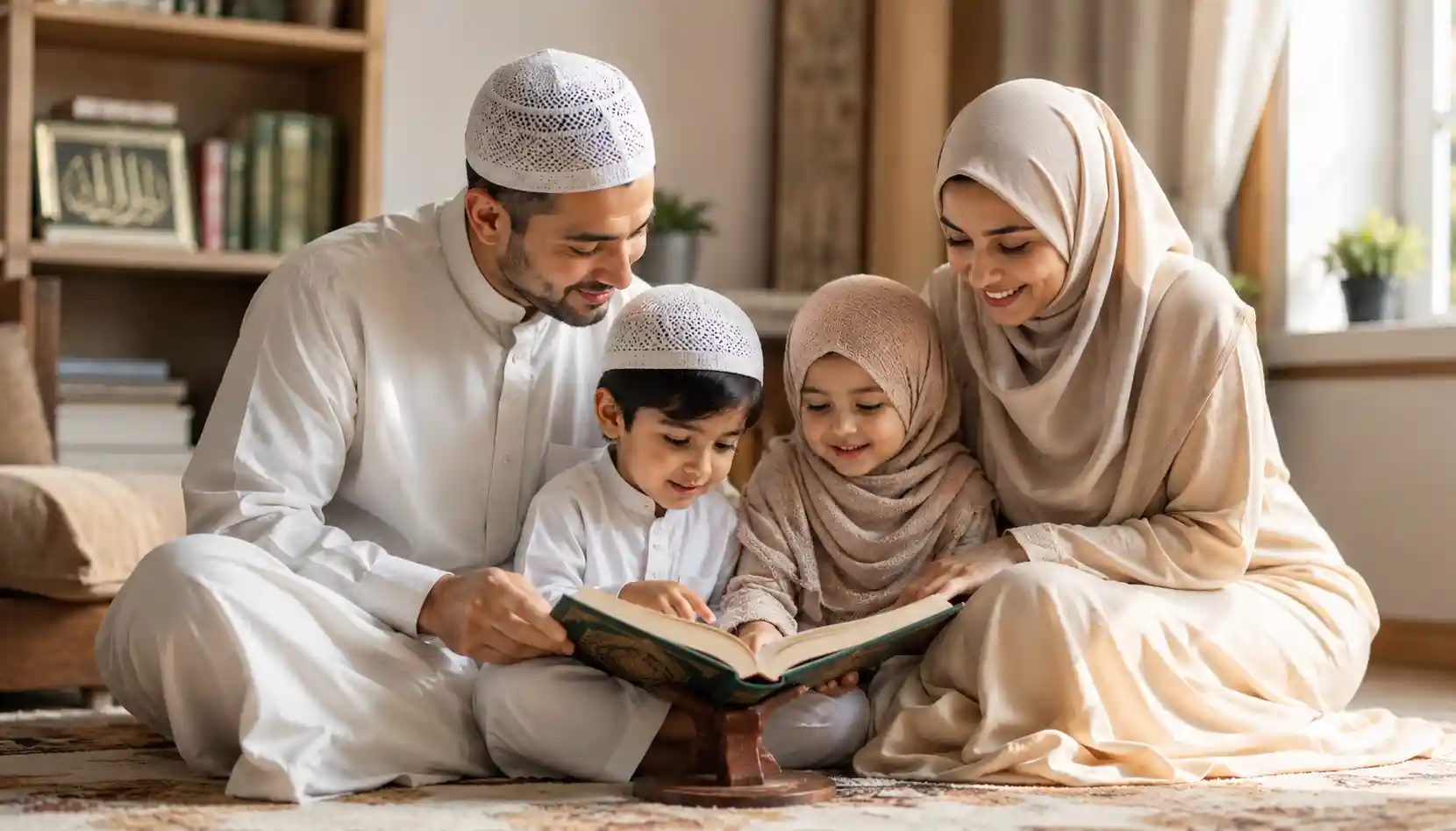
Parenting is one of the greatest blessings and responsibilities Allah gives to a believer. Every child is a precious gift and a trust (Amanah) from Allah. The way parents teach, guide, and care for their children shapes not only their future in this world but also their success in the Hereafter. That is why learning Muslim Parenting Tips is essential for every mother and father who wants to raise children upon faith, good character, and love for Islam.
Modern life brings many challenges. Social media, peer pressure, busy schedules, and changing cultures can make parenting difficult. However, Islam provides timeless guidance through the Quran and the Sunnah of Prophet Muhammad (ﷺ). These teachings help parents build strong faith, good manners, emotional well-being, and family unity.
Whether you are a new parent or have older children, this guide shares practical Islamic parenting tips, authentic Islamic references, and everyday habits that can help you raise righteous children who love Allah and follow His guidance.
What Does Islam Say About Parenting?
Islam places great importance on parenting. Raising children is not simply about providing food, clothing, and education. It also means nurturing their faith, character, and relationship with Allah.
Children Are an Amanah (Trust)
Allah has entrusted children to their parents.
Allah says:
“O you who believe! Protect yourselves and your families from a Fire whose fuel is people and stones.” (Quran 66:6)
This verse reminds parents that their greatest responsibility is helping their families stay on the path of Islam.
Show Mercy and Kindness
The Prophet Muhammad (ﷺ) was known for his kindness toward children. He hugged them, played with them, smiled at them, and never treated them harshly without reason.
He said:
“He who does not show mercy will not be shown mercy.”
(Sahih al-Bukhari)
Mercy should be the foundation of parenting in Islam.
Parents Will Be Accountable
The Prophet (ﷺ) said:
“Each of you is a shepherd and each of you is responsible for his flock.”
(Sahih al-Bukhari & Sahih Muslim)
Parents will answer before Allah for how they raised their children.
Ready to Learn How to Pray Salah?
Now that you’re learning how to read Arabic, the next important step is learning how to perform Salah correctly. Follow our complete beginner-friendly guide that explains every prayer step with easy instructions and illustrations.
📖 How to Pray Salah Step by Step (Complete Beginner’s Guide)15 Best Muslim Parenting Tips
1. Teach Tawheed from an Early Age
Children should first learn that Allah alone deserves worship.
Teach them:
- Allah created everything.
- Allah hears every dua.
- Allah loves those who obey Him.
Simple conversations help children develop strong faith from an early age.
2. Be a Good Role Model
Children copy actions more than words.
If parents:
- Pray regularly
- Speak kindly
- Tell the truth
- Respect others
Children naturally learn these habits.
The best teacher is your own behavior.
3. Pray Together as a Family
Family prayer strengthens both faith and relationships.
Practical ideas:
- Pray Maghrib together.
- Let children stand beside parents.
- Praise their effort rather than demanding perfection.
The Prophet (ﷺ) encouraged teaching children prayer from a young age.
4. Teach Good Manners (Akhlaq)
Good character is one of the greatest gifts parents can give.
Teach children to:
- Say Salam
- Respect elders
- Share with friends
- Speak politely
- Avoid lying
These are essential parts of good manners in Islam for children.
5. Read the Quran Every Day
Even five or ten minutes daily creates a lifelong habit.
Children can:
- Listen to recitation
- Memorize short Surahs
- Learn simple meanings
Consistency matters more than long sessions.
6. Tell Stories of the Prophets
Children love stories.
Teach lessons from:
- Prophet Nuh (AS)
- Prophet Ibrahim (AS)
- Prophet Yusuf (AS)
- Prophet Musa (AS)
- Prophet Muhammad (ﷺ)
These stories teach courage, honesty, patience, forgiveness, and trust in Allah.
7. Encourage Honesty
Praise honesty even when children admit mistakes.
Instead of shouting, calmly discuss:
- What happened?
- Why was it wrong?
- How can we fix it?
This builds trust and confidence.
8. Limit Harmful Media
Not every movie, game, or website supports Islamic values.
Parents should:
- Monitor screen time.
- Choose beneficial content.
- Watch together when possible.
- Encourage outdoor play and reading.
A healthy Muslim home environment protects children’s hearts and minds.
9. Teach Respect for Parents
Allah commands kindness toward parents immediately after worshipping Him.
Teach children to:
- Speak respectfully.
- Help at home.
- Listen carefully.
- Make dua for parents.
Respect begins through daily practice.
10. Create an Islamic Home Environment
Your home should remind children of Allah.
Ideas include:
- Quran recitation
- Islamic books
- Family dua
- Islamic reminders
- Halal entertainment
- Regular Salah
A peaceful home nurtures faith naturally.
💧 Learn Wudu Step by Step
Want to learn the correct way to perform Wudu before Salah? Follow our complete beginner-friendly guide with easy steps, pictures, duas, and important Sunnah tips.
Read Complete Wudu Guide11. Teach Gratitude
Encourage children to thank Allah every day.
Ask questions like:
- What blessing did Allah give you today?
- What are you thankful for?
Gratitude develops contentment and humility.
12. Encourage Charity
Children enjoy helping others.
Allow them to:
- Donate toys.
- Give sadaqah.
- Feed hungry people.
- Support local charities.
Giving develops compassion and generosity.
13. Celebrate Islamic Occasions
Make Islamic celebrations joyful.
Celebrate:
- Eid al-Fitr
- Eid al-Adha
- Ramadan achievements
Decorate the home, exchange gifts, and teach the meaning behind each occasion.
14. Be Patient and Gentle
Every child learns differently.
Instead of anger:
- Listen carefully.
- Explain calmly.
- Correct with kindness.
- Encourage improvement.
Gentle parenting follows the example of Prophet Muhammad (ﷺ).
15. Make Dua for Your Children
One of the greatest gifts parents can give is sincere dua.
Ask Allah for:
- Strong faith
- Good health
- Good character
- Protection
- Success in both worlds
Never underestimate the power of a parent’s dua.
Parenting According to the Quran
The Quran provides beautiful examples of Quran parenting guidance.
Luqman’s Advice
In Surah Luqman (31:13–19), Luqman teaches his son:
- Worship Allah alone.
- Establish Salah.
- Be humble.
- Speak kindly.
- Avoid pride.
Lesson
Parents should teach through wisdom and gentle advice rather than fear.
Prophet Ibrahim (AS)
Prophet Ibrahim involved his son in conversations, showing respect and trust.
Lesson
Good communication strengthens family relationships.
Quran 20:132
Allah commands:
“Command your family to pray and be steadfast in it.”
Practical Lesson
Parents should consistently encourage Salah through love and example.
Parenting According to the Sunnah
The Prophet Muhammad (ﷺ) showed extraordinary love for children.
Examples include:
- Carrying grandchildren while praying.
- Greeting children with Salam.
- Smiling often.
- Playing with them.
- Showing affection openly.
Authentic Hadith teach parents to balance discipline with mercy.
He kissed his grandchildren and said that mercy is a sign of faith (Sahih al-Bukhari).
He also instructed parents to teach children Salah by age seven and discipline appropriately if they neglect it by age ten, while maintaining wisdom and care (reported in Abu Dawud and widely accepted by scholars).
The Sunnah demonstrates that positive parenting in Islam combines love, guidance, patience, and consistency.
Daily Islamic Habits to Teach Children
Small daily habits create lifelong faith.
Encourage children to:
- Say Bismillah before eating.
- Read morning duas.
- Read evening duas.
- Pray the five daily Salah.
- Read a few Quran verses.
- Thank Allah before sleeping.
- Help parents with household tasks.
- Speak politely.
- Say Alhamdulillah often.
- Make dua after prayer.
These habits strengthen Islamic character building and create a strong Muslim family routine.
Common Parenting Mistakes Muslims Should Avoid
Avoid these common mistakes:
Being Too Harsh
Constant anger may create fear instead of love.
Ignoring Children’s Feelings
Listen carefully to their concerns.
Children need emotional support.
Not Spending Quality Time
Even fifteen minutes of focused family time every day builds stronger relationships.
Using Religion Only as Punishment
Children should associate Islam with love, mercy, and hope—not fear alone.
Poor Communication
Encourage questions.
Allow children to express themselves respectfully.
Comparing Children
Every child develops differently.
Celebrate each child’s strengths.
Benefits of Islamic Parenting
Following Islamic parenting principles offers many lifelong benefits:
- Strong relationship with Allah
- Better family communication
- Good manners and respect
- Emotional confidence
- Strong Islamic identity
- Love for Salah and Quran
- Better decision-making
- Respect for parents and elders
- Compassion toward others
- Greater hope for success in the Hereafter
Frequently Asked Questions
How do Muslim parents discipline children?
Islam encourages discipline with wisdom, fairness, patience, and kindness. Parents should explain mistakes, set clear boundaries, reward good behavior, and avoid unnecessary harshness or humiliation.
What age should children start praying?
Parents should gently teach children about Salah from an early age. The Prophet (ﷺ) instructed parents to encourage prayer at seven years old and increase responsibility as they grow older.
How can I teach Islam to young children?
Start with simple concepts such as Allah’s love, daily duas, short Surahs, stories of the Prophets, and practicing Islamic manners through everyday life.
What are Islamic family values?
Islamic family values include honesty, mercy, respect, gratitude, patience, responsibility, charity, forgiveness, and obedience to Allah.
How can I raise confident Muslim children?
Praise their efforts, teach them their Islamic identity, encourage questions, spend quality time together, and remind them that their worth comes from pleasing Allah rather than seeking people’s approval.
Final Thoughts
Parenting is one of the greatest acts of worship when done sincerely for the sake of Allah. Every lesson, every dua, every gentle correction, and every moment spent teaching your child Islam can become a source of continuous reward.
Remember that no parent is perfect. The goal is steady progress, not perfection. Start by introducing one Islamic parenting habit each day—whether it’s praying together, reading a few verses of the Quran, making dua as a family, or practicing kindness at home. Small, consistent actions can shape a child’s heart for a lifetime.
May Allah grant all parents wisdom, patience, and sincerity, and may He bless our children with strong faith, noble character, and success in this world and the Hereafter. Ameen.
❤️ Enjoying Our Free Islamic Resources?
If this article has benefited you, please consider supporting OnlyIslamWay. Your contribution helps us continue providing free Islamic educational resources for Muslims worldwide.
❤️ Donate with PayPal