
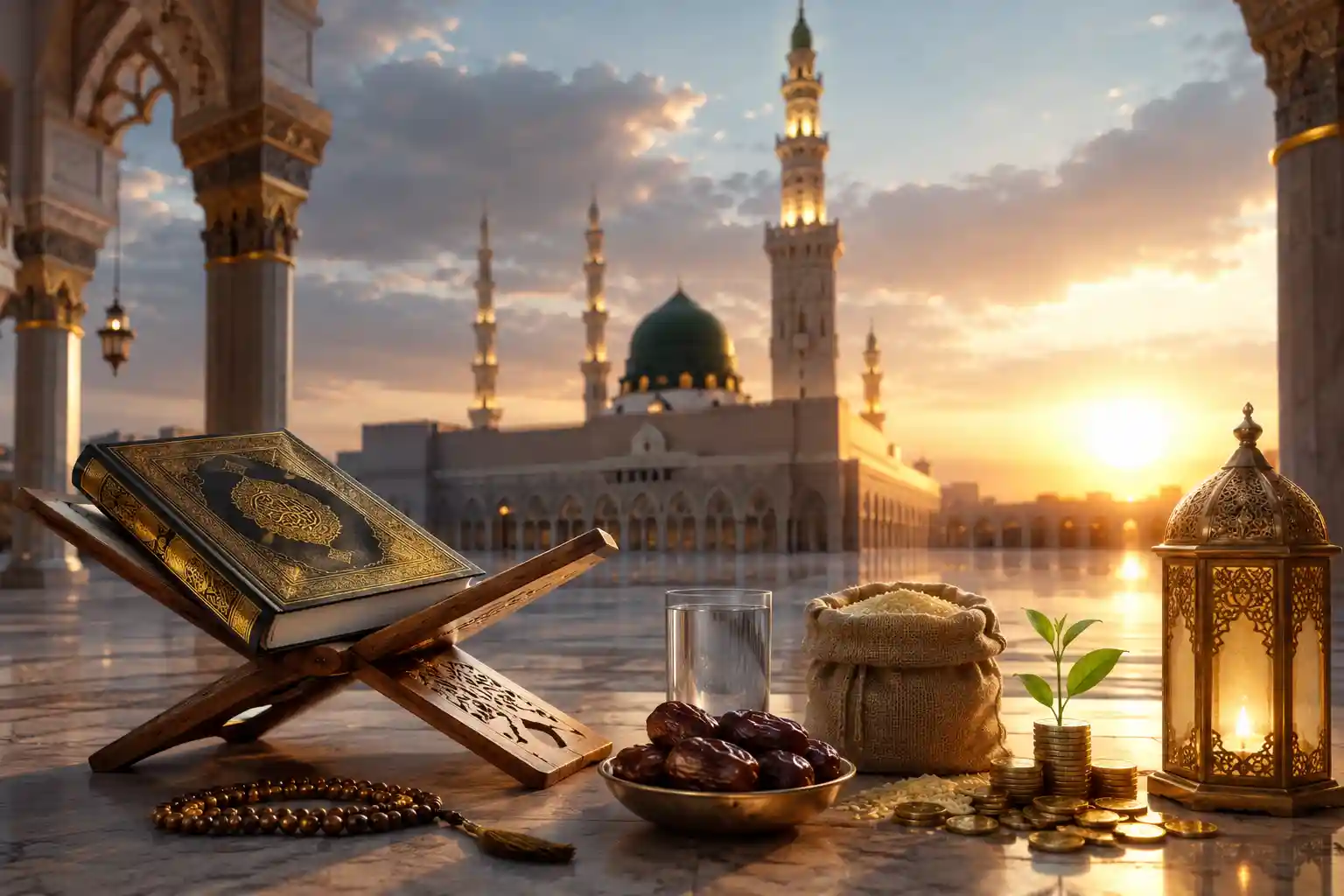
The Five Pillars of Islam are the foundation upon which a Muslim builds their religious life. They are five essential acts of worship that every Muslim is expected to practice according to their ability. These pillars are not merely rituals; they are acts of devotion that strengthen faith, develop discipline, encourage generosity, and create a close connection with Allah.
Every day, Muslims around the world practice one or more of these pillars. From declaring faith to praying five times a day, giving charity, fasting during Ramadan, and performing the pilgrimage to Makkah, these acts unite Muslims regardless of nationality, culture, or language.
If you’re searching for Five Pillars of Islam for beginners, this guide explains each pillar in simple English while remaining faithful to authentic Islamic teachings based on the Qur’an and authentic Hadith.
What Are the Five Pillars of Islam?
The Five Pillars of Islam are the five basic acts of worship that define a Muslim’s religious life. They represent the practical side of Islamic faith and are considered essential for every adult Muslim who meets the required conditions.
The five pillars are:
- Shahada (Faith)
- Salah (Prayer)
- Zakat (Charity)
- Sawm (Fasting in Ramadan)
- Hajj (Pilgrimage to Makkah)
These pillars help Muslims worship Allah sincerely while developing honesty, patience, gratitude, generosity, and self-discipline.
Understanding the Pillars of Islam explained in simple language makes it easier for beginners to appreciate how Islam combines belief with action.
💧 Learn Wudu Step by Step
Want to learn the correct way to perform Wudu before Salah? Follow our complete beginner-friendly guide with easy steps, pictures, duas, and important Sunnah tips.
Read Complete Wudu GuideWhy Are the Five Pillars Important?
The Five Pillars are important because they shape every aspect of a Muslim’s spiritual and moral life.
Some of their key benefits include:
- Strengthen faith in Allah.
- Create a daily routine centered on worship.
- Build discipline and responsibility.
- Encourage kindness toward others.
- Help reduce selfishness through charity.
- Teach patience and self-control.
- Promote equality among Muslims.
- Unite Muslims worldwide through shared acts of worship.
- Prepare believers for accountability in the Hereafter.
- Foster gratitude for Allah’s blessings.
Rather than being isolated rituals, these pillars work together to help Muslims live balanced, ethical, and compassionate lives.
1. Shahada (Faith)
The first and most important pillar is Shahada, the declaration of faith.
Without sincere belief, the remaining pillars lose their true spiritual purpose.
Meaning of Shahada
The Arabic word Shahada means “testimony” or “bearing witness.”
It is the declaration that a person believes in the oneness of Allah and accepts Prophet Muhammad (peace and blessings be upon him) as Allah’s final Messenger.
Arabic Declaration
أشهد أن لا إله إلا الله، وأشهد أن محمدًا رسول الله
Transliteration
Ashhadu an la ilaha illa Allah, wa ashhadu anna Muhammadan rasul Allah.
English Translation
“I bear witness that there is no deity worthy of worship except Allah, and I bear witness that Muhammad is the Messenger of Allah.”
Why Is Shahada Important?
Shahada is the foundation of every Muslim’s faith.
By sincerely accepting this testimony, a person enters Islam.
This declaration teaches several essential beliefs:
- Allah alone deserves worship.
- Allah has no partners.
- Prophet Muhammad (peace be upon him) is the final Messenger.
- Muslims should follow the Qur’an and authentic Sunnah.
Every other pillar is built upon this belief.
When Do Muslims Recite Shahada?
Muslims recite Shahada:
- When embracing Islam.
- During the Adhan (call to prayer).
- In daily prayers.
- During remembrance of Allah (Dhikr).
- At important moments throughout life.
Many Muslims also hope their final words before death will be the Shahada.
2. Salah (Prayer)
The second pillar is Salah, the five daily prayers performed at specific times each day.
Prayer is the direct connection between a believer and Allah. Unlike many forms of worship that happen occasionally, Salah reminds Muslims to remember Allah throughout the day.
For many people learning Islam basics, Salah is one of the most recognizable Islamic practices.
The Five Daily Prayers
Muslims perform five obligatory prayers every day:
| Prayer | Time |
|---|---|
| Fajr | Before sunrise |
| Dhuhr | After midday |
| Asr | Late afternoon |
| Maghrib | Immediately after sunset |
| Isha | At night |
Each prayer includes standing, bowing, prostrating, and sitting while reciting verses from the Qur’an and prescribed supplications.
Why Do Muslims Pray Five Times a Day?
Praying five times daily helps Muslims:
- Remember Allah regularly.
- Stay spiritually focused.
- Develop discipline.
- Seek forgiveness.
- Express gratitude.
- Find peace during busy lives.
The Qur’an teaches that prayer helps prevent sinful behavior and reminds believers of Allah’s guidance.
Benefits of Salah
Some important benefits of regular prayer include:
- Strengthens faith.
- Brings inner peace.
- Encourages punctuality.
- Develops humility.
- Improves self-discipline.
- Builds consistency.
- Creates unity through congregational prayer.
- Increases mindfulness of Allah.
Many Muslims describe Salah as a spiritual reset that provides comfort during both joyful and difficult times.
Ready to Learn How to Pray Salah?
Now that you’re learning how to read Arabic, the next important step is learning how to perform Salah correctly. Follow our complete beginner-friendly guide that explains every prayer step with easy instructions and illustrations.
📖 How to Pray Salah Step by Step (Complete Beginner’s Guide)3. Zakat (Charity)
The third pillar is Zakat, an obligatory form of charity that purifies wealth and supports those in need.
Unlike voluntary donations, Zakat is a religious duty for Muslims whose savings reach a minimum financial threshold known as Nisab.
Understanding Zakat explained helps beginners see that Islam encourages both spiritual growth and social responsibility.
What Does Zakat Mean?
The word Zakat literally means “purification” and “growth.”
By giving a portion of wealth to eligible recipients, Muslims acknowledge that everything ultimately belongs to Allah.
Traditionally, eligible Muslims give 2.5% of qualifying savings held for one lunar year, provided those savings meet or exceed the Nisab threshold. The exact calculation can vary depending on the types of assets owned, so many Muslims seek guidance from knowledgeable scholars or trusted Islamic organizations.
Who Must Pay Zakat?
Zakat is obligatory for adult Muslims who:
- Own wealth above the Nisab.
- Have possessed that qualifying wealth for one lunar year.
- Meet the conditions outlined in Islamic law.
Those who do not meet these conditions are not required to pay Zakat.
Who Receives Zakat?
The Qur’an identifies specific categories of eligible recipients, including:
- People living in poverty.
- Those in financial hardship.
- Individuals employed to administer Zakat.
- Certain other eligible categories mentioned in the Qur’an (Surah At-Tawbah 9:60).
This structured system helps ensure that Zakat reaches those whom Islamic teachings designate as deserving recipients.
Zakat vs. Sadaqah
Many beginners confuse Zakat with Sadaqah.
Here is the difference:
| Zakat | Sadaqah |
|---|---|
| Obligatory | Voluntary |
| Specific rules | No fixed amount |
| Given to eligible recipients | Can be given more broadly for charitable purposes |
| One of the Five Pillars | Recommended act of kindness |
Sadaqah may include money, food, clothing, helping others, or even a kind word, while Zakat has defined religious requirements.
Benefits of Zakat
Giving Zakat offers both personal and community benefits:
- Reduces poverty.
- Supports vulnerable members of society.
- Purifies wealth.
- Reduces greed.
- Encourages gratitude.
- Strengthens community bonds.
- Promotes social justice.
- Reminds Muslims that wealth is a trust from Allah.
Islam teaches that generosity benefits both the giver and the receiver, creating a more compassionate and caring society.
4. Sawm (Fasting)
The fourth pillar of Islam is Sawm, which means fasting during the month of Ramadan, the ninth month of the Islamic lunar calendar.
For Muslims, fasting is much more than avoiding food and drink. It is an act of worship that teaches self-control, patience, gratitude, and devotion to Allah. During Ramadan, Muslims focus on improving their relationship with Allah through increased prayer, reading the Qur’an, giving charity, and performing good deeds.
For anyone searching for Sawm explained or Islamic beliefs for beginners, fasting is one of the most spiritually rewarding practices in Islam.
What Is Ramadan?
Ramadan is the holiest month in Islam because it is the month in which Allah revealed the Qur’an to Prophet Muhammad (peace and blessings be upon him).
Throughout Ramadan, Muslims fast every day from dawn (Fajr) until sunset (Maghrib).
During these hours, Muslims abstain from:
- Food
- Drinks (including water)
- Smoking
- Marital relations during fasting hours
- Intentional sinful speech and behavior
The fast begins with a pre-dawn meal called Suhoor and ends each evening with Iftar, traditionally by eating dates and drinking water, following the Sunnah of the Prophet Muhammad (peace be upon him).
Rules of Fasting
To observe Sawm correctly, Muslims should:
- Make the intention (niyyah) to fast.
- Refrain from eating and drinking between dawn and sunset.
- Avoid actions that invalidate the fast.
- Increase acts of worship.
- Read and reflect on the Qur’an.
- Offer additional voluntary prayers.
- Practice patience and good manners.
Fasting is not only about hunger—it is about developing taqwa (God-consciousness).
Spiritual and Practical Benefits of Sawm
Fasting offers many benefits, including:
- Strengthens faith in Allah.
- Develops self-discipline.
- Teaches patience.
- Encourages gratitude for everyday blessings.
- Helps Muslims understand the struggles of those who are hungry.
- Promotes generosity and compassion.
- Reduces bad habits.
- Encourages spiritual reflection.
- Builds stronger family and community relationships.
Ramadan is often considered a time of spiritual renewal, forgiveness, and personal growth.
Who Is Exempt from Fasting?
Islam is a religion of mercy. Certain people are excused from fasting if it would cause hardship or harm.
Exemptions may include:
- Young children who have not reached puberty.
- Elderly individuals who are unable to fast.
- People with illnesses where fasting would be harmful.
- Travelers under certain conditions.
- Pregnant or breastfeeding women if fasting could affect their health or their child’s health.
- Women during menstruation or postnatal bleeding.
Depending on the reason for missing the fast, Islamic law provides guidance on making up missed fasts or, in some cases, offering compensation (fidyah). Muslims are encouraged to consult knowledgeable scholars regarding their specific circumstances.
5. Hajj (Pilgrimage)
The fifth and final pillar of Islam is Hajj, the pilgrimage to the holy city of Makkah (Mecca) in Saudi Arabia.
Understanding Hajj explained helps beginners appreciate one of the world’s largest annual gatherings of worshippers.
Hajj is a once-in-a-lifetime obligation for Muslims who are physically and financially able to undertake the journey.
Who Must Perform Hajj?
Hajj becomes obligatory for Muslims who:
- Are adults.
- Are mentally competent.
- Are physically capable of traveling.
- Can afford the journey without neglecting the needs of their dependents.
- Have a safe route to Makkah.
If a Muslim is permanently unable to perform Hajj due to health or other valid reasons, Islamic rulings differ depending on the circumstances.
When Does Hajj Take Place?
Hajj is performed annually during the Islamic month of Dhul Hijjah, specifically from the 8th to the 13th of the month.
Millions of Muslims from every continent gather in Makkah during these sacred days, demonstrating the unity and equality of the global Muslim community.
Main Rituals of Hajj
The pilgrimage includes several important acts of worship, including:
- Entering the state of Ihram.
- Performing Tawaf (circling the Ka’bah).
- Walking between Safa and Marwah (Sa’i).
- Standing at Arafat, considered the most significant part of Hajj.
- Spending time in Muzdalifah.
- Symbolically stoning the pillars at Mina.
- Offering an animal sacrifice (for pilgrims required to do so according to their type of Hajj).
- Completing a final Tawaf before leaving Makkah.
Each ritual commemorates important events connected to Prophet Ibrahim (Abraham), his wife Hajar (Hagar), and their son Isma’il (Ishmael), while emphasizing complete submission to Allah.
Spiritual Benefits of Hajj
Hajj transforms many Muslims spiritually by helping them:
- Strengthen their faith.
- Seek Allah’s forgiveness.
- Remember the Day of Judgment.
- Experience equality regardless of race or social status.
- Build unity with Muslims from around the world.
- Renew their commitment to living according to Islamic teachings.
For many pilgrims, Hajj is one of the most meaningful experiences of their lives.
Summary Table
| Pillar | Meaning | Required For | Purpose |
|---|---|---|---|
| Shahada | Declaration of faith | Every Muslim | Affirm belief in Allah and His Messenger |
| Salah | Five daily prayers | Every adult Muslim (with valid exemptions in Islamic law) | Worship Allah and maintain spiritual discipline |
| Zakat | Obligatory charity | Eligible Muslims with wealth above Nisab | Purify wealth and support those in need |
| Sawm | Fasting during Ramadan | Adult Muslims with valid exemptions | Develop self-control and God-consciousness |
| Hajj | Pilgrimage to Makkah | Muslims who are physically and financially able | Demonstrate submission to Allah and unity among Muslims |
Benefits of Following the Five Pillars
Practicing the Five Pillars positively affects every aspect of a Muslim’s life.
Some of the most important benefits include:
- Builds a strong relationship with Allah.
- Strengthens faith and trust in God.
- Encourages honesty and integrity.
- Develops patience and self-control.
- Creates daily discipline and consistency.
- Promotes generosity and compassion.
- Reduces selfishness and greed.
- Strengthens family and community bonds.
- Encourages gratitude for Allah’s blessings.
- Prepares believers for accountability in the Hereafter.
Together, these pillars help Muslims become spiritually stronger while contributing positively to society.
Common Misunderstandings
Are the Five Pillars Enough to Be a Good Muslim?
The Five Pillars are the foundation of Islam, but Islam also emphasizes sincere belief, good character, honesty, justice, kindness to parents, fulfilling people’s rights, avoiding sins, and following the teachings of the Qur’an and the authentic Sunnah.
Is Hajj Compulsory for Everyone?
No.
Hajj is only obligatory for Muslims who are physically able, financially capable, and able to travel safely. Those who cannot meet these conditions are not sinful for not performing Hajj.
Is Zakat the Same as Charity?
No.
Zakat is a mandatory act of worship with specific rules and eligible recipients.
Sadaqah is voluntary charity and may be given at any time in any amount.
Women’s Prayer Guide in Islam
Learn the complete step-by-step method of Salah for women according to Islamic teachings. This beginner-friendly guide explains prayer preparation, prayer positions, essential recitations, and common mistakes to help Muslim women pray with confidence and correctness.
Read Women’s Prayer Guide →Frequently Asked Questions
1. What are the Five Pillars of Islam?
The Five Pillars are Shahada (Faith), Salah (Prayer), Zakat (Charity), Sawm (Fasting during Ramadan), and Hajj (Pilgrimage to Makkah). They form the foundation of Islamic worship.
2. Which pillar is the most important?
Shahada is the foundation because sincere belief in Allah and His Messenger underpins all other acts of worship. Every pillar is essential in its proper place.
3. Can children perform the Five Pillars?
Children are encouraged to learn prayer, fasting, and other acts of worship gradually. Most religious obligations become mandatory after reaching puberty, although families often introduce these practices earlier.
4. Why do Muslims pray five times a day?
Five daily prayers help Muslims remember Allah throughout the day, strengthen faith, seek forgiveness, and maintain spiritual discipline.
5. Is Hajj compulsory?
Hajj is compulsory only once in a lifetime for Muslims who are physically and financially able and who meet the required conditions.
6. What happens if someone cannot fast?
Islam provides exemptions for those who are ill, traveling, elderly, pregnant, breastfeeding under qualifying circumstances, or otherwise unable to fast. Depending on the situation, missed fasts may be made up later or other rulings may apply.
7. Is Zakat mandatory?
Yes. Zakat is mandatory for eligible Muslims whose wealth reaches the Nisab and meets the conditions established in Islamic law.
8. Can non-Muslims learn about the Five Pillars?
Absolutely. Learning about the Five Pillars helps anyone understand the beliefs, values, and practices of Islam and promotes mutual respect and understanding.
🔗 Learn More About Islamic PurificationConclusion
The Five Pillars of Islam Explained guide demonstrates that Islam is built upon faith, worship, compassion, discipline, and sincere devotion to Allah. These five pillars are not separate rituals but a complete way of life that nurtures spiritual growth, personal responsibility, and care for others.
Whether someone is beginning their journey in Islam or simply wishes to understand Islamic beliefs, learning the Five Pillars is the ideal first step. Each pillar teaches valuable lessons that can be practiced gradually throughout life.
By understanding Shahada, Salah, Zakat, Sawm, and Hajj, readers gain a clearer picture of how Muslims worship Allah and strive to live according to His guidance.
Continue Your Islamic Learning
May Allah increase us all in beneficial knowledge, sincere faith, and righteous actions. Ameen.
❤️ Enjoying Our Free Islamic Resources?
If this article has benefited you, please consider supporting OnlyIslamWay. Your contribution helps us continue providing free Islamic educational resources for Muslims worldwide.
❤️ Donate with PayPal