
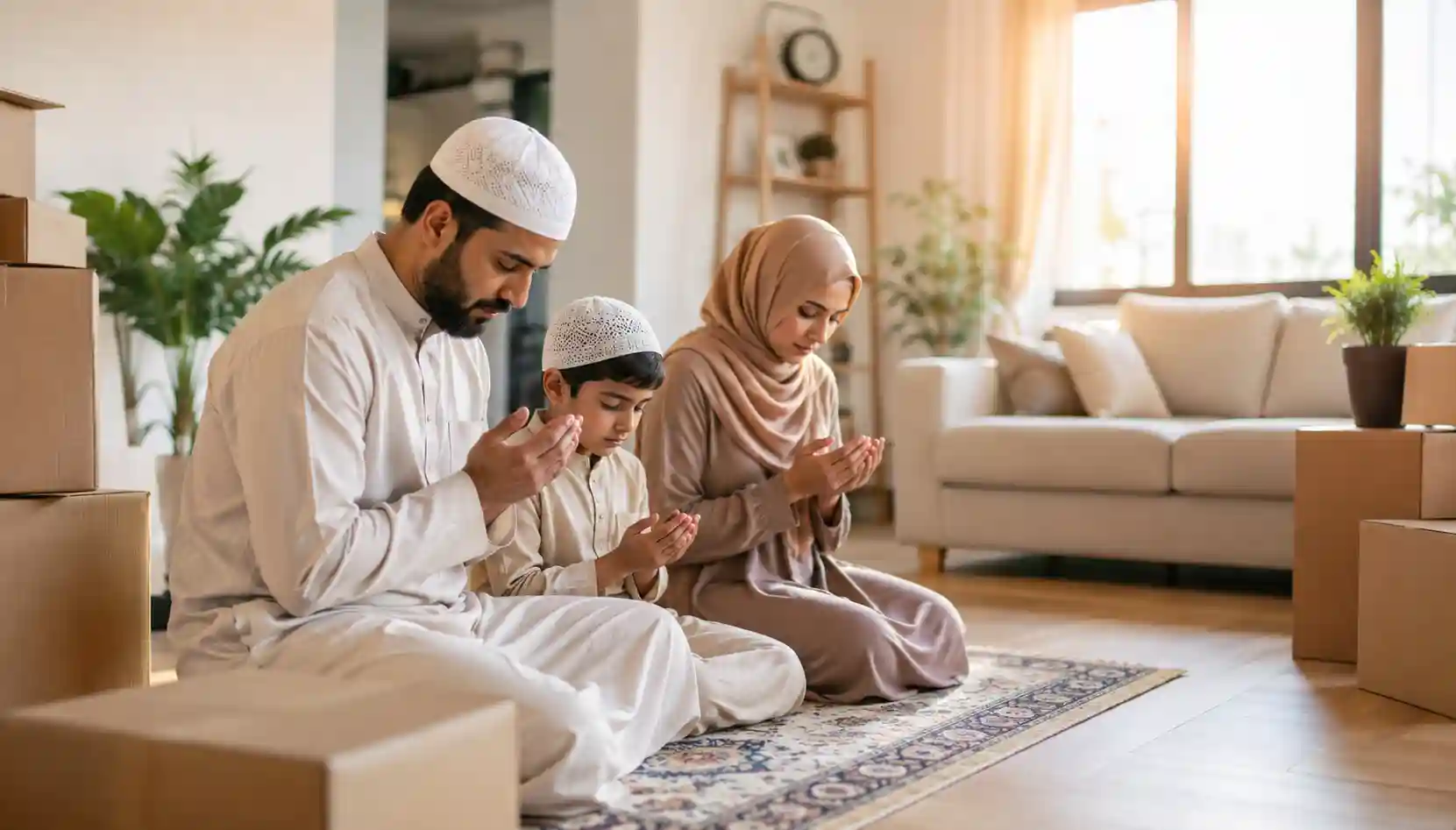
Moving into a new home is an important moment for a Muslim family. A new house can become a place of worship, family life, learning, rest, and countless blessings. Naturally, Muslims want their home to be filled with peace, gratitude, obedience to Allah, and barakah.
Many people search for a specific Dua for New Home to read when they move into a new house. However, Islamic guidance should always be based on the Qur’an and authentic Sunnah. We should not attribute a particular supplication to Prophet Muhammad ﷺ unless there is reliable evidence for it.
There is no authentically established special dua exclusively prescribed for purchasing or moving into a new house. Nevertheless, Islam gives us authentic guidance about remembering Allah when entering the home, asking Allah for goodness, praying for righteous family members, and making the home a place where Allah is remembered.
In this guide, we will look at authentic duas and Qur’anic supplications that are appropriate for a new home, including their Arabic text, transliteration, English meaning, references, and practical ways to bring Islamic blessings into family life.
✔ Easy to read | ✔ Printable | ✔ Step-by-step guide
Is There a Specific Dua for a New Home in Islam?
There is no sahih hadith establishing a special dua specifically for buying or moving into a new house that every Muslim must recite.
This distinction is important.
Sometimes a dua is widely circulated online as an “Islamic new home dua,” but popularity does not make a supplication part of the Sunnah. Muslims should be careful about presenting a particular wording as a Prophetic practice without authentic evidence.
There is, however, authentic guidance concerning remembering Allah when entering one’s home. Sahih Muslim records that when a person enters his home and mentions Allah’s name, and also mentions Allah when eating, Shaytan says that he has no place to spend the night or meal there.
Therefore, rather than searching for an invented special ritual, a Muslim can enter the new home while saying Bismillah, greet the people inside with salam, remember Allah, and make sincere personal dua.
There are also excellent Qur’anic duas for one’s family, righteous offspring, gratitude, goodness, and a blessed place. These are perfectly suitable for someone beginning life in a new home.
Dua for Entering a New Home
One of the clearest authentic practices connected with entering the home is to mention Allah’s name.
The Prophet Muhammad ﷺ taught that when a person enters his house and remembers Allah, Shaytan does not find a place to spend the night there. The same hadith connects remembrance of Allah with beginning one’s food. This narration is recorded in Sahih Muslim 2018a and also in Sunan Abi Dawud 3765.
What to Say
Arabic:
بِسْمِ اللهِ
Transliteration:
Bismillah
English Meaning:
“In the name of Allah.”
Reference:
Sahih Muslim 2018a; Sunan Abi Dawud 3765.
This is not a special “new house dua.” Rather, it is an authentic practice of remembering Allah when entering one’s home. It can therefore be followed when entering a new house just as it can when entering one’s home generally.
It is also good Islamic manners to greet the people in the house with As-Salamu ‘Alaikum.
Dua for Protection When Entering the Home
The authentic Sunnah emphasizes dhikr and mentioning Allah’s name when entering the home.
Jabir ibn Abdullah رضي الله عنه reported that the Prophet ﷺ said that when someone enters his house and mentions Allah’s name when entering and when eating, Shaytan says that there is no place for him to stay or eat.
This teaches an important principle: a Muslim home should not be disconnected from Allah.
Bismillah When Entering
Arabic:
بِسْمِ اللهِ
Transliteration:
Bismillah
Meaning:
“In the name of Allah.”
The protection described in the hadith is connected with remembering Allah, rather than with a particular magical formula.
There is also a longer wording commonly circulated as a dua for entering the house:
اللَّهُمَّ إِنِّي أَسْأَلُكَ خَيْرَ الْمَوْلِجِ وَخَيْرَ الْمَخْرَجِ، بِسْمِ اللَّهِ وَلَجْنَا، وَبِسْمِ اللَّهِ خَرَجْنَا، وَعَلَى اللَّهِ رَبِّنَا تَوَكَّلْنَا
However, readers should be aware that the narration in Sunan Abi Dawud 5096 has been considered weak by some hadith scholars because of an interruption in its chain, although other scholars have authenticated or strengthened it.
For an article prioritizing the strongest evidence, it is better not to describe this wording as an unquestionably sahih Prophetic dua. The authentic guidance in Sahih Muslim to mention Allah upon entering the home is sufficient.
Dua for Barakah in a New Home
A Muslim can ask Allah to place barakah in a new home, protect the family, strengthen faith, and make the house a place of peace and obedience.
There is no need to invent a special “new house barakah dua.”
Instead, use authentic Qur’anic supplications and make personal dua.
For example, a person can sincerely ask:
“O Allah, bless this home, make it a place of peace and obedience, protect my family from harm, and help us remember You and worship You.”
This is a general personal dua, not a quotation from the Qur’an or Hadith.
There is nothing wrong with asking Allah for these lawful and beneficial things in one’s own language.
Quranic Duas That Can Be Made for Your Home and Family
The Qur’an contains beautiful supplications that are highly relevant to family life and a Muslim household.
1. Dua for a Righteous Family
Arabic:
رَبَّنَا هَبْ لَنَا مِنْ أَزْوَاجِنَا وَذُرِّيَّاتِنَا قُرَّةَ أَعْيُنٍ وَاجْعَلْنَا لِلْمُتَّقِينَ إِمَامًا
Transliteration:
Rabbana hab lana min azwajina wa dhurriyyatina qurrata a’yunin waj’alna lil-muttaqina imama.
English Meaning:
“Our Lord! Bless us with spouses and offspring who will be the joy of our hearts, and make us models for the righteous.”
Reference: Qur’an 25:74.
This is an excellent dua for family in a new home because it asks Allah for righteous spouses and children and for the family to become an example of goodness.
2. Dua for Good in This Life and the Hereafter
Arabic:
رَبَّنَا آتِنَا فِي الدُّنْيَا حَسَنَةً وَفِي الْآخِرَةِ حَسَنَةً وَقِنَا عَذَابَ النَّارِ
Transliteration:
Rabbana atina fid-dunya hasanatan wa fil-akhirati hasanatan wa qina ‘adhaban-nar.
English Meaning:
“Our Lord! Give us good in this world and good in the Hereafter, and protect us from the punishment of the Fire.”
Reference: Qur’an 2:201.
A new home is one part of worldly life, so this comprehensive dua can naturally be included when asking Allah for goodness in one’s new circumstances.
3. Dua for Keeping the Family Connected to Salah
Arabic:
رَبِّ اجْعَلْنِي مُقِيمَ الصَّلَاةِ وَمِنْ ذُرِّيَّتِي رَبَّنَا وَتَقَبَّلْ دُعَاءِ
Transliteration:
Rabbi-j’alni muqimas-salati wa min dhurriyyati rabbana wa taqabbal du’a.
English Meaning:
“My Lord! Make me and my descendants keep up prayer. Our Lord! Accept my prayer.”
Reference: Qur’an 14:40.
This is especially meaningful when establishing a new household. A beautiful home is not defined only by its furniture or size; its real value comes from obedience to Allah.
4. Dua for Gratitude and Righteous Offspring
Arabic:
رَبِّ أَوْزِعْنِي أَنْ أَشْكُرَ نِعْمَتَكَ الَّتِي أَنْعَمْتَ عَلَيَّ وَعَلَىٰ وَالِدَيَّ وَأَنْ أَعْمَلَ صَالِحًا تَرْضَاهُ وَأَصْلِحْ لِي فِي ذُرِّيَّتِي إِنِّي تُبْتُ إِلَيْكَ وَإِنِّي مِنَ الْمُسْلِمِينَ
Transliteration:
Rabbi awzi’ni an ashkura ni’mataka allati an’amta ‘alayya wa ‘ala walidayya wa an a’mala salihan tardahu wa aslih li fi dhurriyyati inni tubtu ilayka wa inni minal-muslimin.
English Meaning:
“My Lord! Inspire me to always be grateful for Your favors which You have bestowed upon me and upon my parents, and to do good deeds that please You. And make my offspring righteous. I truly repent to You and I am one of those who submit.”
Reference: Qur’an 46:15.
This supplication beautifully combines gratitude, righteous action, repentance, and the wellbeing of one’s children.
Dua for a Peaceful and Happy Home
Islamic peace in a home is not created by a particular phrase alone.
A peaceful Muslim home is built through daily actions and obedience to Allah.
Establish Salah
Prayer should have an important place in family life. Ibrahim عليه السلام asked Allah to make him and his descendants people who establish prayer.
Make Dhikr
Remember Allah regularly in the home. The Prophet ﷺ compared a home in which Allah is remembered with one in which Allah is not remembered to the difference between living and dead. Sahih Muslim 779 records this teaching.
Recite the Qur’an
The Prophet ﷺ said that Shaytan runs away from a house in which Surah Al-Baqarah is recited. Sahih Muslim 780 records this narration.
Practice Good Character
Kindness between spouses, respect for parents, patience with children, forgiveness, and avoiding abusive or harmful behavior are essential to a healthy Muslim household.
Use Halal Earnings
The blessing of a home is also connected to how a family lives. Muslims should strive for halal income, lawful food, honest dealings, and obedience to Allah.
What to Do When Moving Into a New House According to Islam
When moving into a new home, there is no required Islamic ceremony that every Muslim must perform.
Instead, consider these practical steps:
- Thank Allah for providing the home.
- Say Bismillah when entering.
- Greet the family with salam.
- Establish Salah in the new home.
- Recite Qur’an and maintain regular dhikr.
- Make dua for your spouse, children, parents, and family.
- Avoid haram activities inside the home.
- Maintain good family manners.
- Welcome relatives and neighbors kindly.
- Give charity if you wish as an act of gratitude.
Charity can be a beautiful expression of gratitude, but Muslims should not believe that a particular charity amount or special ceremony is an obligatory requirement for moving into a house.
Cultural practices can vary from one country to another. A cultural tradition should not automatically be described as Sunnah unless there is evidence for it.
Dua for New Home in Arabic, English and Transliteration
For an easy reference, here are the strongest relevant supplications discussed above.
Quranic Dua for Family
Arabic:
رَبَّنَا هَبْ لَنَا مِنْ أَزْوَاجِنَا وَذُرِّيَّاتِنَا قُرَّةَ أَعْيُنٍ وَاجْعَلْنَا لِلْمُتَّقِينَ إِمَامًا
Transliteration:
Rabbana hab lana min azwajina wa dhurriyyatina qurrata a’yunin waj’alna lil-muttaqina imama.
Meaning:
“Our Lord! Bless us with spouses and offspring who will be the joy of our hearts, and make us models for the righteous.”
Reference: Qur’an 25:74.
Dua for a Blessed Place
The Qur’an also records the supplication:
Arabic:
رَبِّ أَنزِلْنِي مُنزَلًا مُّبَارَكًا وَأَنتَ خَيْرُ الْمُنزِلِينَ
Transliteration:
Rabbi anzilni munzalan mubarakan wa anta khayrul-munzilin.
Meaning:
“My Lord! Allow me a blessed landing, for You are the best accommodator.”
Reference: Qur’an 23:29.
This verse was originally part of the story of Prophet Nuh عليه السلام and his ark. It should not be falsely described as a special Sunnah dua for moving into a house. However, its wording asks Allah for a blessed place of settlement, so a Muslim may use the Qur’anic supplication as a general dua while asking Allah for a blessed home.
New Home Dua PDF Download
You can save these authentic Qur’anic and Sunnah-based supplications for easy reading when moving into your new home.
📥 Download Dua for New Home in Islam PDF
Get the complete Dua for New Home in Islam in PDF format for free.
Download PDFHow to Read Dua for a New Home
There is no compulsory special procedure for reading a new home dua.
A simple approach is:
- Make a sincere intention to use your new home in ways pleasing to Allah.
- Praise Allah for the blessing.
- Say Bismillah when entering.
- Greet the people in the home with salam.
- Read an authentic Qur’anic supplication, such as Qur’an 25:74.
- Ask Allah for barakah, peace, protection, and righteousness.
- Pray for your family.
- Continue Salah, dhikr, Qur’an and good deeds after moving in.
Sending blessings upon the Prophet ﷺ is also an established general practice when making dua, but it should not be presented as a special compulsory step for moving into a house.
Can I Make My Own Dua for My New Home?
Yes.
A Muslim may ask Allah for lawful and beneficial things in their own language.
For example:
“O Allah, bless this home, make it a place of peace and obedience, protect my family from harm, provide us with halal provision, and help us remember and worship You.”
This is a personal/general dua. It is not a Qur’anic verse and it is not a hadith.
There is no need to use Arabic for every personal dua. What matters is sincerity and asking Allah for things that are permissible and beneficial.
Things to Avoid in a New Muslim Home
A new home should be a place of faith rather than superstition.
Muslims should avoid:
- Treating cultural rituals as obligatory Islamic practices without evidence.
- Circulating fabricated duas as authentic Sunnah.
- Claiming that a specific number of recitations guarantees wealth or protection.
- Using religion to create unnecessary fear.
- Believing objects or talismans independently possess protective power.
- Attributing unsupported practices to Prophet Muhammad ﷺ.
Protection comes from Allah. A Muslim should rely upon Him while following authentic acts of worship and remembrance.
Frequently Asked Questions
1. Is there a specific dua for a new home in Islam?
There is no authentically established special dua exclusively prescribed for moving into a new house. Muslims can mention Allah when entering and make authentic Qur’anic and general personal duas.
2. What should I say when entering a new house?
Say Bismillah and remember Allah when entering. This is supported by the authentic narration in Sahih Muslim concerning remembrance of Allah when entering the home.
3. Is there a Quranic dua for a new home?
There is no Qur’anic verse specifically labeled “new home dua.” However, Qur’an 25:74, 2:201, 14:40 and other supplications can appropriately be made for family, goodness and righteous living.
4. Can I make my own dua for my new house?
Yes. You can ask Allah in your own language for barakah, protection, halal provision, peace, righteous children and anything else that is lawful and beneficial.
5. How can I bring barakah into my home?
Maintain Salah, Qur’an, dhikr, good manners, halal earnings, family kindness and obedience to Allah. The Prophet ﷺ taught the importance of remembering Allah in the home.
6. What should Muslims do after moving into a new home?
Thank Allah, say Bismillah when entering, establish Salah, remember Allah, recite Qur’an, make dua for the family and maintain good Islamic manners.
7. Can I download the new home dua as a PDF?
Yes. OnlyIslamWay can provide Arabic, English, Hindi and Urdu PDF resources using the download placeholders provided above once the actual files are uploaded.
8. Is there a dua for protecting a house from Shaytan?
Authentic Sunnah teaches remembering Allah when entering the home, and Sahih Muslim also reports that Shaytan runs away from a house in which Surah Al-Baqarah is recited.
9. Can I read the dua in English?
Yes. You may make personal dua in English or another language you understand. For Qur’anic supplications, learning and reciting the Arabic wording is beneficial, while understanding the meaning helps develop sincerity and reflection.
10. Should I host a special Islamic ceremony when moving into a new home?
Islam does not prescribe a compulsory special ceremony simply because someone moved into a new house. Family gatherings or meals may be permissible as ordinary social activities, but cultural customs should not be presented as obligatory Sunnah without evidence.
Related Islamic Resources on OnlyIslamWay
If you are preparing your home and family for a stronger Islamic routine, these guides may also be useful:
- Surah Yaseen PDF in English, Hindi & Arabic
- Surah Ikhlas PDF in English, Hindi, Urdu & Arabic
- Surah Adiyat PDF Download
- Surah Mulk PDF
- Surah Rahman PDF
- Ayatul Kursi PDF
- How to Perform Wudu Step by Step
- How to Perform Ghusl Step by Step
❤️ Enjoying Our Free Islamic Resources?
If this article has benefited you, please consider supporting OnlyIslamWay. Your contribution helps us continue providing free Islamic educational resources for Muslims worldwide.
❤️ Donate with PayPalFeatured Snippet Answer: What Is the Dua for a New Home in Islam?
There is no authentic dua specifically prescribed only for moving into a new home. Muslims should say Bismillah when entering and remember Allah. They may also make Qur’anic duas such as Qur’an 25:74 for righteous family, or make a personal dua asking Allah for barakah, peace, protection and goodness in their new home.
SEO Metadata
SEO Title:
Dua for New Home in Islam – Arabic & PDF
Meta Description:
Learn the authentic Dua for New Home in Islam with Arabic, transliteration, English meaning, Quranic duas, Sunnah guidance and PDF downloads.
URL Slug:dua-for-new-home
Focus Keyword:
Dua for New Home
Secondary Keywords:
- dua when entering a new house,
- dua for entering a new home,
- Islamic dua for new home,
- dua for new house in Islam,
- dua for home protection
- dua for blessing a new home
- dua for barakah in new home
- Quran dua for home
- new home dua in English
- new home dua Arabic
SEO Tags:
- Dua for New Home,
- New Home Dua,
- Islamic Dua,
- Dua for New House,
- Home Protection Dua,
- Quranic Duas,
- Dua for Family,
- Barakah in Home,
- Islamic Home,
- Muslim Family,
Image SEO
Featured Image Title:
Dua for New Home in Islam
Featured Image Alt Text:
Dua for New Home in Islam
Image Caption:
Authentic Islamic duas and Qur’anic supplications for a blessed and peaceful home.
Image Description:
A peaceful Muslim home representing gratitude, family, prayer, remembrance of Allah, and sincere dua for goodness and barakah in a new home.
Editorial note: The strongest evidence in this article comes from the Qur’an and authentic hadith. In particular, Sahih Muslim establishes remembering Allah upon entering the home, while Qur’an 25:74, 2:201, 14:40, 46:15 and 23:29 provide relevant supplications. The wording often circulated online as a dedicated “dua for entering the house” in Abu Dawud 5096 should be treated with appropriate hadith-authentication caution rather than simply labeled sahih.
This version is ready to publish after replacing the four PDF placeholders and adding your actual internal-link URLs.