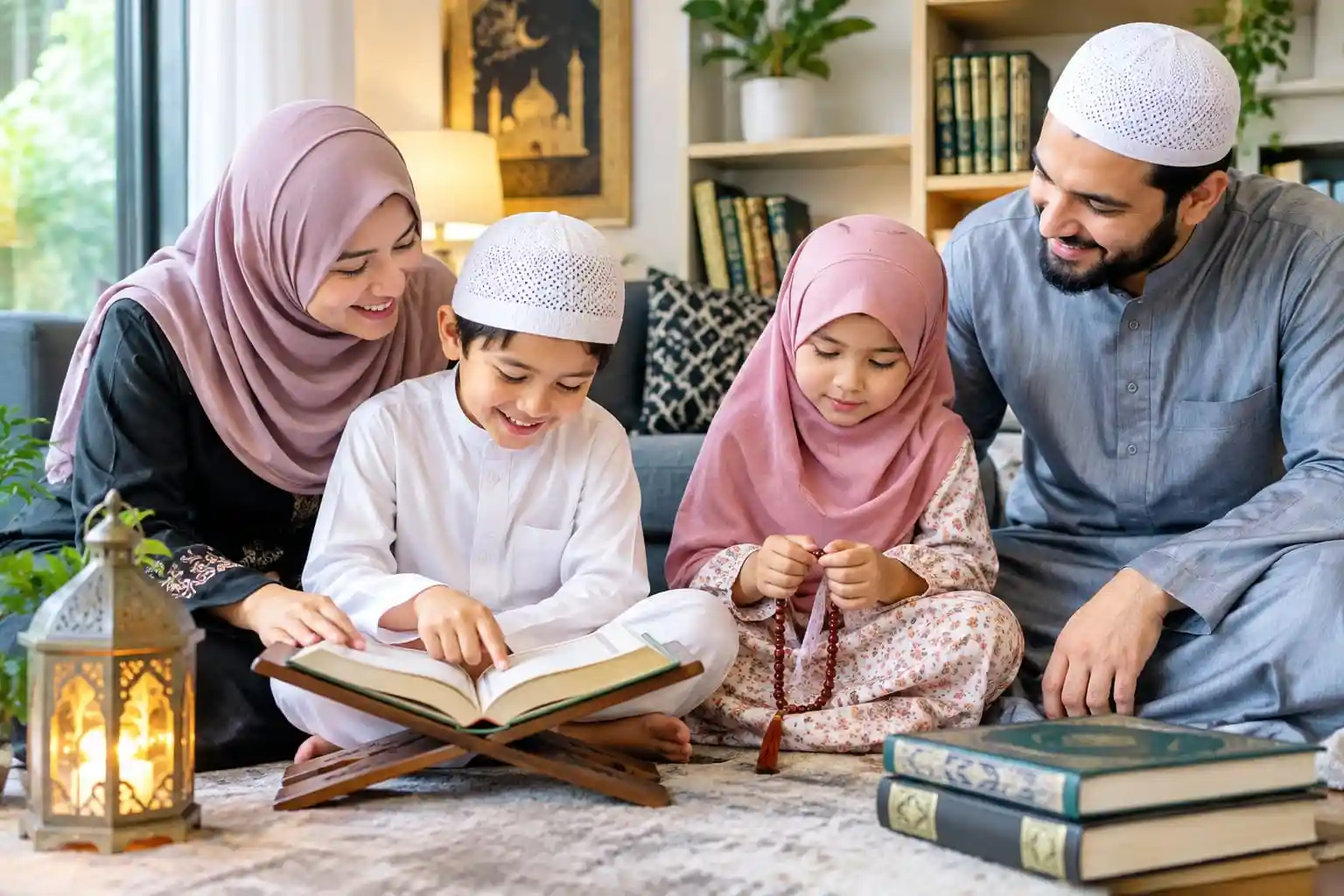
Raising children with strong Islamic values is one of the most meaningful goals for many Muslim parents. But in busy modern life, parents may wonder where to begin and how to make Islam a natural and positive part of everyday family life.
Learning how to build Islamic habits in children does not mean giving children a long list of rules or expecting perfection. Instead, it means gradually helping them develop a loving relationship with Allah, the Quran, Salah, dua, good character, and Islamic values.
Childhood habits can become an important part of a person’s daily routine as they grow. Small actions repeated with love and consistency—such as saying Bismillah before eating, greeting others with Assalamu Alaikum, or listening to the Quran—can help children become familiar with Islamic practices.
Muslim parenting can also feel challenging for families living in the USA, UK, Canada, and other non-Muslim-majority countries. School schedules, work, social activities, and different cultural influences can make consistency difficult.
The good news is that parents do not need to do everything at once. Start small, be patient, lead by example, and make Islamic learning positive and meaningful. Every child learns differently, and building good Islamic habits is a journey that develops over time.
Children learn many things through daily repetition. The habits they experience during childhood may influence the routines and values they carry as they grow.
Islamic habits for children can provide a sense of structure throughout the day. For example, saying Bismillah before eating, making dua before sleeping, and setting aside time for Quran learning can help connect ordinary daily activities with faith.
Children also learn by watching the people around them. When parents regularly pray, speak kindly, express gratitude, and make dua, children can naturally observe these behaviors.
Small habits are often easier to build than major changes. A child may begin by learning one short dua or one Islamic word. Over time, parents can gradually introduce more learning and responsibility in an age-appropriate way.
Positive experiences can also support a child’s Islamic identity. When children associate Islam with family connection, learning, kindness, worship, and meaningful traditions, they may feel more comfortable asking questions and participating in Islamic life.
The goal is not to create a perfect routine. The goal is to help children gradually understand and practice Islamic values with sincerity and love.
Start With Small and Simple Islamic Habits
One common mistake in teaching Islam to children is trying to teach too much too quickly.
A young child does not need to memorize many duas, Surahs, Islamic rules, and historical lessons all at once. Too much information can become overwhelming.
Instead, start with simple daily Islamic habits.
Easy habits to begin with
Saying Bismillah before eating
Saying Alhamdulillah when expressing gratitude
Greeting family members with Assalamu Alaikum
Making a short and simple dua
Listening to a short Surah
Learning one Islamic word at a time
Saying thank you and showing kindness
Consistency is usually more helpful than trying to do everything perfectly for a few days.
For younger children
Focus on listening, repetition, and imitation. You can say Bismillah together before meals or play a short Quran recitation.
For school-age children
Add simple explanations. Explain what a dua means, discuss kindness, or help them learn short Surahs gradually.
For older children
Encourage questions and meaningful discussions. Help them understand why Islamic values matter and allow them to participate in building their own routines.
Building good habits in Muslim children works best when parents move gradually and adjust their approach to the child’s age and personality.
10 Daily Islamic Habits to Teach Children
1. Saying Bismillah Before Eating
Why it matters: Saying Bismillah can help children remember Allah during an everyday activity.
How parents can teach it: Say it together before family meals. Young children learn well through repetition.
Simple example: Before breakfast, pause for a few seconds and say, “Bismillah. Let’s begin.”
2. Saying Alhamdulillah With Gratitude
Why it matters: Gratitude is an important Islamic value and can help children appreciate the good things in their lives.
How parents can teach it: Encourage children to mention something they are thankful for.
Simple example: At dinner, ask everyone: “What is one thing you are thankful for today?”
3. Greeting With Assalamu Alaikum
Why it matters: The Islamic greeting can become a familiar part of a child’s Muslim identity and family culture.
How parents can teach it: Use the greeting regularly at home and when meeting Muslim family and friends.
Simple example: Encourage your child to greet grandparents or friends with Assalamu Alaikum.
4. Making Simple Daily Duas
Why it matters: Dua can help children understand that they can turn to Allah in different moments of life.
How parents can teach it: Start with short, easy duas and explain their general meaning.
Simple example: Create a bedtime routine using a simple dua before sleeping.
Why it matters: Salah is a central part of Islamic worship, and children can gradually become familiar with it through observation and learning.
How parents can teach it: Allow children to watch and join parents in age-appropriate ways.
Simple example: Give a young child space beside you and let them imitate simple prayer movements while learning gradually.
For detailed guidance on how prayer is performed, see:
[Internal Link: How to Perform Namaz Step by Step]
8. Showing Kindness and Respect
Why it matters: Good character is an important part of Islamic values.
How parents can teach it: Model respectful speech and explain kindness during real situations.
Simple example: Ask your child to help a sibling, share a toy, or check on a family member.
9. Practicing Honesty
Why it matters: Honesty helps build trust and strong character.
How parents can teach it: Praise children when they tell the truth, even when they made a mistake.
Simple example: If your child breaks something and honestly admits it, first appreciate their honesty before calmly discussing what happened.
10. Ending the Day With Dua and Reflection
Why it matters: A peaceful bedtime routine can help children develop gratitude and reflection.
How parents can teach it: Keep the routine short and calming.
Simple example: Ask:
What was something good about today?
Did we help someone today?
What are we thankful for?
Then end with a bedtime dua and a short Surah.
Make Salah a Positive Part of Your Child’s Routine
Parents who want to know how to teach children about Islam often ask specifically about Salah.
One of the most practical ways to begin is through example. Children notice when parents make time for prayer.
Let children observe you preparing for Salah. When appropriate, allow them to stand nearby and gradually learn through participation.
Practical ways to introduce Salah
Let children observe parents praying.
Explain Salah using simple language.
Teach one small part at a time.
Create a clean and comfortable prayer space.
Use encouragement instead of turning every learning moment into pressure.
Establish regular family routines where possible.
A child-friendly prayer space does not need to be complicated. A clean prayer mat and a quiet area can be enough.
Parents should also remember that children’s understanding and ability develop at different speeds. Islamic rulings related to religious obligations and age can involve important details, so parents seeking specific religious guidance should consult a qualified scholar they trust.
For habit-building, focus on helping children become familiar with Salah and understand that prayer is an important and meaningful part of Muslim life.
Helping children love the Quran should be about regular positive exposure, understanding, and family connection.
Read together
Even a few minutes of family Quran time can create consistency.
Start with short Surahs
Short Surahs can feel more manageable for young learners.
Explain simple meanings
Children may enjoy Quran learning more when they understand basic meanings rather than only memorizing sounds.
Listen to beautiful recitation
Play Quran recitation during appropriate quiet moments at home or in the car.
Create a regular Quran routine
Choose a realistic time, such as:
After breakfast
After school
Before dinner
Before bedtime
Celebrate progress
Acknowledge effort and improvement. Avoid creating unnecessary pressure around memorization.
Busy families can start with only five or ten minutes. A short routine practiced consistently can be easier to maintain than an ambitious routine that quickly disappears.
Older children may also enjoy exploring longer Surahs with translations appropriate to their level.
Every family has different schedules. The following Muslim kids daily routine is only an example.
Time of Day
Simple Islamic Habit
Morning
Wake with gratitude and make a simple dua
Breakfast
Say Bismillah before eating
Before School
Use Assalamu Alaikum and practice good manners
During the Day
Practice kindness and honesty
Afternoon
Short Islamic learning activity
Evening
Quran time and Salah practice
Family Time
Discuss one Islamic value
Before Bed
Dua, short Surah, gratitude, and reflection
Morning
Wake up with gratitude
Make a simple morning dua
Use the Islamic greeting
During the Day
Say Bismillah before meals
Practice good manners
Speak respectfully
Complete one short Islamic activity
Evening
Spend a few minutes with the Quran
Practice Salah gradually
Have a short family discussion
Before Bed
Read a bedtime dua
Listen to or read a short Surah
Share something you are thankful for
Keep the routine flexible. Families with young children, school schedules, or demanding jobs can adapt it to their own lives.
Teach Islamic Values Through Everyday Life
Teaching Islam to children is not limited to formal lessons.
Daily life provides many opportunities to teach Islamic values for children.
Honesty
Encourage children to tell the truth and create an environment where they are not afraid to admit mistakes.
Kindness
Instead of only saying, “Be kind,” demonstrate kindness at home. Help a neighbor, speak gently, or support a family member.
Respect
Teach children to listen respectfully while also allowing them to ask thoughtful questions.
Helping Others
Give children small opportunities to help at home or participate in charitable family activities.
Gratitude
Encourage regular use of Alhamdulillah and conversations about blessings.
Patience
Use everyday situations, such as waiting in line or completing difficult homework, to discuss patience.
Forgiveness
Teach children how to apologize and forgive appropriately.
Responsibility
Give children age-appropriate responsibilities and encourage them to complete tasks.
These lessons become more meaningful when children see Islamic values practiced rather than only discussed.
Be a Good Islamic Role Model
Children often learn from what parents do.
If parents want their children to develop Islamic habits, their own daily actions can have a powerful influence.
Children may notice when parents:
Make time for Salah
Read or listen to the Quran
Speak respectfully
Tell the truth
Show patience
Make dua
Treat people kindly
Apologize after making mistakes
Parents do not need to be perfect.
Every parent has difficult days. Making a mistake does not mean you have failed at Muslim parenting. In fact, calmly admitting a mistake and trying to improve can also teach children important lessons.
Focus on sincere effort and gradual consistency.
How to Raise Muslim Children in the West
Raising Muslim children in the USA, UK, Canada, and other Western countries can bring both opportunities and challenges.
Children may interact daily with people from different cultures, religions, and backgrounds. Parents can help children develop confidence in their Muslim identity without teaching fear or hostility toward others.
Balance Islamic identity with daily life
Talk openly about school, friendships, holidays, and social situations.
Find positive Muslim communities
When possible, connect with local Muslim families, children’s programs, and community activities.
Visit the mosque when possible
Positive mosque experiences can help children feel connected to the wider Muslim community.
Encourage healthy friendships
Connecting with Muslim friends can help children see that they are part of a larger community.
Explain Islamic celebrations
Help children understand the meaning and joy of occasions such as Ramadan and Eid through family traditions and activities.
Answer questions calmly
Children may ask difficult questions about religion or why their family practices Islam differently from others.
Listen carefully. Give age-appropriate answers. If you do not know the answer, it is okay to say you will learn more.
For parents learning how to raise Muslim children in USA, how to raise Muslim children in UK, or supporting Muslim parenting in Canada, the same foundation remains useful: strong family relationships, positive Islamic learning, good role models, and open communication.
Make Islamic Learning Fun
Children are often more engaged when learning includes enjoyable activities.
Try these Islamic activities for kids:
Islamic story time
Read stories about Islamic history, good character, and meaningful lessons.
Quran listening time
Let children listen to short recitations and gradually recognize familiar Surahs.
Islamic quiz games
Create simple questions based on what your child recently learned.
Islamic crafts
Make Ramadan decorations, Eid cards, or simple projects about Islamic values.
One dua per week
Learn one short dua together and practice using it during the week.
Family discussions
Choose one question such as:
“How can we show kindness this week?”
Children’s Islamic books
Choose age-appropriate books that encourage curiosity and understanding.
Fun does not replace serious learning. It can support it by helping children develop positive memories around Islamic education.
Avoid These Common Mistakes When Teaching Islam to Children
Teaching too much too quickly
Try instead: Introduce one habit at a time.
Only focusing on rules
Try instead: Explain values and meanings in age-appropriate ways.
Using fear excessively
Try instead: Use a balanced approach that includes hope, love, responsibility, and understanding.
Comparing children
Try instead: Focus on each child’s individual progress.
Expecting perfection
Try instead: Praise sincere effort and gradual improvement.
Ignoring children’s questions
Try instead: Listen carefully and answer calmly.
Being inconsistent
Try instead: Build small routines that your family can realistically maintain.
Making Islamic learning feel like punishment
Try instead: Create positive learning experiences and avoid using religious activities as consequences for unrelated behavior.
How to Stay Consistent as a Busy Parent
Busy parents often feel they do not have enough time for a complete Islamic routine.
Start smaller.
1. Start with one habit
Choose one habit for the entire family.
Example: Say Bismillah before every meal.
2. Use reminders
Place a simple reminder in the kitchen or set an appropriate phone reminder for family Quran time.
3. Create family routines
Connect Islamic habits with things you already do every day.
4. Keep expectations realistic
Five minutes done consistently may be more practical than an hour that rarely happens.
5. Practice together
Children are more likely to participate when parents join them.
6. Track progress
Use a simple weekly chart, especially for younger children.
7. Focus on consistency rather than perfection
Missing a day does not mean giving up. Simply continue the next day.
A simple weekly habit-building plan
Week 1: Bismillah before meals Week 2: Add one daily dua Week 3: Add five minutes of Quran time Week 4: Add a weekly family Islamic discussion
Build gradually.
A Simple 7-Day Islamic Habit Plan for Children
Day
Islamic Habit
Simple Activity
Day 1
Bismillah
Practice before every meal
Day 2
Simple dua
Learn and repeat one short dua
Day 3
Short Surah
Listen together
Day 4
Kindness
Do one helpful act
Day 5
Salah
Learn about prayer or observe family prayer
Day 6
Islamic story
Read and discuss one lesson
Day 7
Reflection
Share gratitude and family reflections
Parents can repeat this plan and adapt it based on their child’s age and interests.
There is no need to rush. Building a strong Islamic routine for kids is usually more sustainable when habits are repeated gradually.
Frequently Asked Questions
1. How do I teach Islamic habits to my child?
Start with small daily habits such as Bismillah before meals, simple duas, Islamic greetings, Quran listening, and kindness. Practice together and lead by example.
2. What are good Islamic habits for children?
Good daily Islamic habits for kids include gratitude, dua, Quran learning, Salah practice, kindness, honesty, respect, and helping others.
3. At what age should children start learning about Islam?
Children can begin learning simple Islamic concepts from an early age through words, routines, stories, observation, and family experiences. Adjust teaching to the child’s development and understanding.
4. How can I make Islamic learning fun for kids?
Use stories, quiz games, crafts, Quran listening, family discussions, Ramadan activities, and age-appropriate Islamic books.
5. How do I encourage my child to pray?
Lead by example, allow children to observe Salah, introduce learning gradually, and create a positive routine. For detailed questions about Islamic rulings, consult a qualified scholar.
6. How can I help my child love the Quran?
Create regular Quran time, start with short Surahs, explain simple meanings, listen together, and celebrate sincere progress without excessive pressure.
7. How do I raise Muslim children in the USA?
Build strong family routines, discuss Islamic identity positively, connect with supportive Muslim communities, answer questions calmly, and help children feel confident about their faith.
8. How do I raise Muslim children in the UK?
Use the same foundations: consistent Islamic routines, positive community connections, open communication, family learning, and age-appropriate discussions about school and society.
9. How can Muslim parents in Canada teach Islamic values?
Teach values through daily life. Model kindness, honesty, patience, gratitude, and respect while also creating opportunities for Quran learning, dua, and community connection.
10. What should I do if my child loses interest in Islamic learning?
Avoid panic or excessive pressure. Try to understand why interest has decreased. Change the learning method, make activities more age-appropriate, listen to your child’s concerns, and rebuild consistency gradually.
Learning how to build Islamic habits in children is not about creating a perfect child or following an impossible routine.
Start small.
Be consistent.
Lead by example.
Make Islamic learning positive.
Be patient with your child and yourself.
Every child has a different personality, learning style, and pace. Some children may love stories, while others enjoy activities, questions, Quran recitation, or family discussions.
The most important thing is to keep building a positive connection between your child and Islam over time.
A simple dua before bed, a family Quran routine, a kind action, or a meaningful conversation may seem small today. But repeated positive experiences can become part of a child’s understanding of faith and family life.
Keep going, even when your routine is not perfect. Building Islamic habits is a long-term journey, and sincere, consistent effort can make a meaningful difference over time.
May Allah guide Muslim parents and families, help children grow with beneficial knowledge and good character, and make our homes places of faith, kindness, learning, and peace. Ameen.
❤️ Enjoying Our Free Islamic Resources?
If this article has benefited you, please consider supporting
OnlyIslamWay. Your contribution helps us continue providing
free Islamic educational resources for Muslims worldwide.