
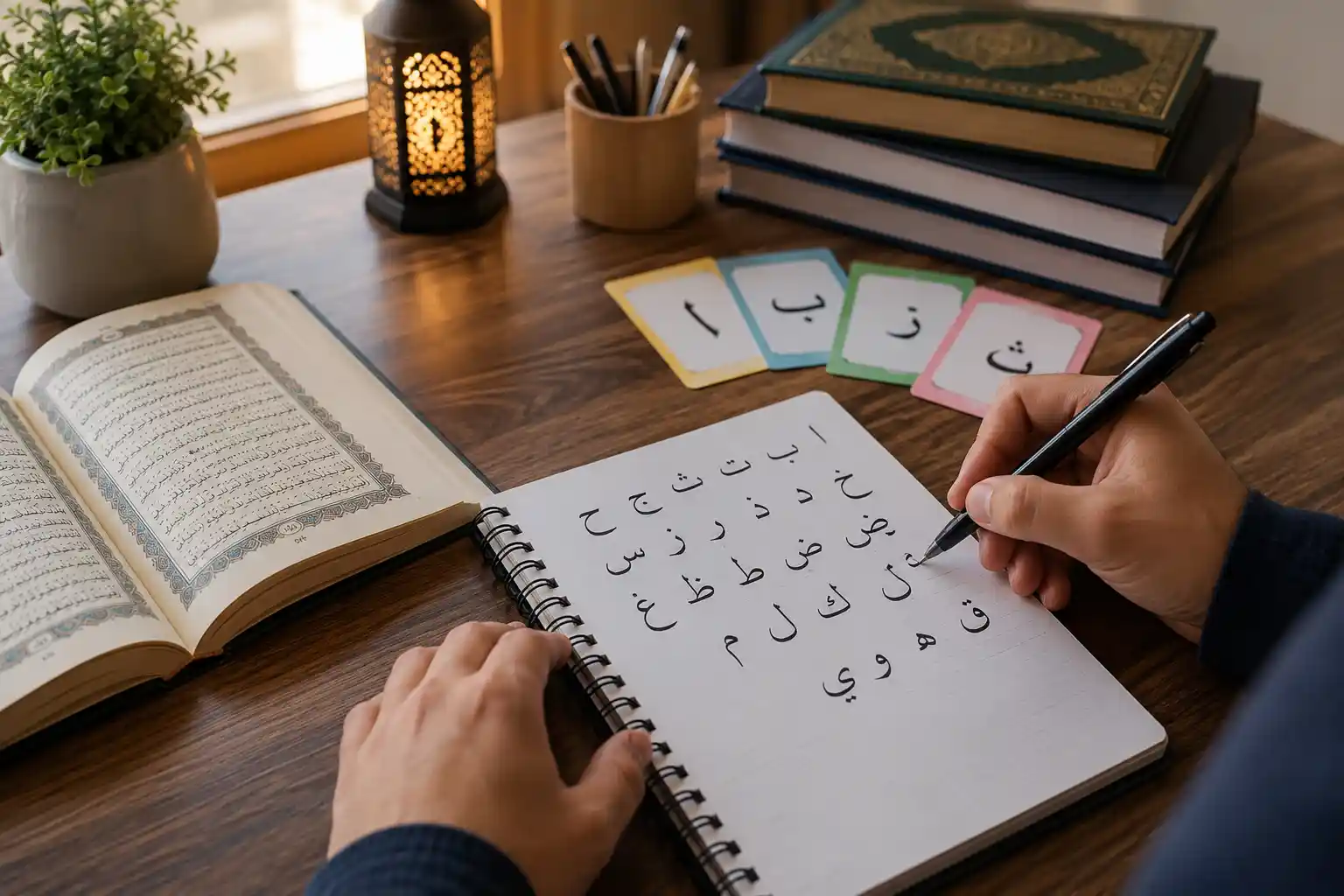
Millions of Muslims around the world want to learn Arabic because it is the language of the Holy Quran. Whether you are a new Muslim, someone who wants to improve Quran recitation, or a complete beginner, learning to read Arabic can be one of the most rewarding skills you ever develop.
Many people feel nervous when they first see Arabic writing. The letters look different from English, and the words are written from right to left. However, learning Arabic is much easier than most beginners think.
The good news is that you do not need to speak fluent Arabic to start reading Arabic. By learning the Arabic alphabet, understanding basic vowel marks, and practicing regularly, you can begin reading simple Arabic words within a short period of time.
In this guide, you will learn exactly how to read Arabic for beginners using a step-by-step method that is simple, practical, and suitable for both adults and children.
Ready to Learn How to Pray Salah?
Now that you’re learning how to read Arabic, the next important step is learning how to perform Salah correctly. Follow our complete beginner-friendly guide that explains every prayer step with easy instructions and illustrations.
What Is Arabic?
Arabic is one of the most widely spoken languages in the world. It is spoken by hundreds of millions of people across the Middle East, North Africa, and many other regions.
For Muslims, Arabic holds a special place because it is the language chosen by Allah for the Quran.
Modern Arabic vs Quranic Arabic
There are two main forms of Arabic beginners should know:
Modern Standard Arabic (MSA)
- Used in news, books, education, and media
- Spoken across many Arabic-speaking countries
Quranic Arabic
- The language of the Quran
- Contains classical vocabulary and grammar
- Important for understanding Islamic texts
If your goal is Quran reading, you should focus on Quranic Arabic pronunciation and reading skills first.
Can Beginners Learn Arabic Easily?
Yes, absolutely.
One of the biggest misconceptions is that Arabic is impossible to learn unless you are born into an Arabic-speaking family.
The truth is that thousands of people in the USA, UK, Canada, and Australia learn Arabic every year without any previous experience.
Common Misconceptions
“Arabic is too difficult.”
Arabic has its challenges, but learning to read Arabic is much easier than becoming fluent in speaking and writing.
“I am too old to learn.”
People of all ages successfully learn Arabic. Consistency matters more than age.
“I need to memorize thousands of words.”
To start reading Arabic, you only need to learn letters, sounds, and basic reading rules.
Realistic Expectations
With daily practice:
- 1–2 weeks: Learn letters
- 2–4 weeks: Read simple words
- 1–3 months: Read beginner Quranic text
- 3–6 months: Improve fluency
Learn Wudu Before Reading the Quran
Before reading the Quran, every Muslim should know how to perform Wudu (Ablution) correctly. Wudu is an important act of purification that prepares you for Salah and Quran recitation. If you are new to Islam or learning the basics, our complete beginner-friendly guide explains every step in simple English with illustrations and practical tips.
👉 Read: Wudu Step by Step for BeginnersLearn the correct order of washing, common mistakes to avoid, Sunnah practices, and how to perform Wudu properly before prayer.
Arabic Alphabet for Beginners
The Arabic alphabet contains 28 letters.
Unlike English, Arabic is written from right to left.
Examples:
ا = Alif
ب = Ba
ت = Ta
ث = Tha
ج = Jeem
ح = Haa
خ = Khaa
د = Dal
ذ = Dhal
ر = Ra
ز = Zay
س = Seen
ش = Sheen
ص = Saad
ض = Daad
ط = Taa
ظ = Zaa
ع = Ain
غ = Ghain
ف = Fa
ق = Qaaf
ك = Kaaf
ل = Laam
م = Meem
ن = Noon
ه = Haa
و = Waw
ي = Ya
Why Letter Recognition Is Important
Before reading words, you must instantly recognize each letter.
Think of it like learning the ABCs before reading English.
The faster you recognize Arabic letters, the faster your reading improves.
Understanding Arabic Vowels
Arabic uses special symbols called Harakat to represent short vowel sounds.
Short Vowels
Fatha (َ)
Produces an “a” sound.
Example:
بَ = Ba
Kasra (ِ)
Produces an “i” sound.
Example:
بِ = Bi
Damma (ُ)
Produces a “u” sound.
Example:
بُ = Bu
Long Vowels
Alif (ا)
Creates a long “aa” sound.
Waw (و)
Creates a long “oo” sound.
Ya (ي)
Creates a long “ee” sound.
Learning these vowels is one of the most important steps in reading Arabic correctly.
Learn Your Daily Prayers Correctly
Once you start learning Arabic for Quran reading, it is also important to understand the correct number of rakats in each daily prayer. Check our complete Sunni prayer guide below.
View 5 Time Namaz Rakat Chart For SunniHow Arabic Letters Change Shape
Arabic letters can look different depending on where they appear in a word.
Each letter may have:
Isolated Form
When standing alone.
Beginning Form
At the start of a word.
Middle Form
Inside a word.
Ending Form
At the end of a word.
For example, the letter ب changes appearance but keeps the same sound.
Understanding these shape changes is essential for reading Arabic fluently.
Step-by-Step Method to Read Arabic
Step 1: Learn Arabic Letters
Start by memorizing all 28 letters.
Practice:
- Flashcards
- Alphabet charts
- Letter tracing
Goal:
Recognize every letter instantly.
Step 2: Practice Pronunciation
Listen to native Arabic pronunciation.
Pay special attention to:
- ح (Haa)
- خ (Khaa)
- ع (Ain)
- غ (Ghain)
- ق (Qaaf)
These sounds do not exist in English.
Repeat each letter aloud multiple times daily.
Step 3: Learn Harakat (Vowel Marks)
Master:
- Fatha
- Kasra
- Damma
Practice reading:
بَ
بِ
بُ
تَ
تِ
تُ
Continue until vowel sounds become automatic.
Step 4: Join Letters Together
Learn how letters connect.
Examples:
ب + ا = با
م + ا = ما
ك + ت + ب = كتب
Reading connected letters is where real Arabic reading begins.
Step 5: Read Simple Arabic Words
Begin with easy words:
الله
نور
بيت
كتاب
باب
Read slowly and focus on accuracy.
Step 6: Practice Quranic Arabic Daily
Start with short surahs.
Good options:
- Surah Al-Fatihah
- Surah Al-Ikhlas
- Surah Al-Falaq
- Surah An-Nas
Even 10 minutes daily can produce excellent progress.
Common Arabic Pronunciation Mistakes
English speakers often struggle with:
ع (Ain)
Produced from deep in the throat.
ح (Haa)
A soft breathy sound.
ق (Qaaf)
Stronger than the English K.
غ (Ghain)
A deep gargling sound.
How to Improve Pronunciation
- Listen carefully
- Repeat frequently
- Record yourself
- Learn from qualified teachers
- Practice Quran recitation daily
Best Tips to Learn Arabic Faster
Daily Practice Routine
Practice every day, even if only for 10 minutes.
Consistency beats long study sessions.
Use Flashcards
Review letters and vocabulary regularly.
Listening Exercises
Listen to:
- Quran recitation
- Arabic alphabet lessons
- Arabic pronunciation videos
Read Aloud
Reading aloud improves:
- Pronunciation
- Confidence
- Memory
How Long Does It Take to Learn Arabic Reading?
The timeline varies for everyone.
Typical beginner progress:
First Month
Learn letters and vowels.
Second Month
Read simple words and phrases.
Third Month
Read beginner Quranic text.
Six Months
Develop comfortable reading fluency.
Regular daily practice speeds up progress significantly.
Best Resources to Learn Arabic
Books
- Noorani Qaida
- Madinah Arabic Reader
- Gateway to Arabic
Apps
- Duolingo
- Quran Companion
- Memrise
Online Courses
- Quran academies
- Arabic learning platforms
- Islamic education websites
Quran Learning Resources
Use:
- Tajweed courses
- Quran reading classes
- Guided recitation programs
Benefits of Learning Arabic
Better Quran Understanding
You begin connecting directly with Allah’s words.
Improved Salah Experience
Prayer becomes more meaningful.
Stronger Islamic Knowledge
Arabic opens the door to:
- Tafsir
- Hadith
- Islamic books
- Classical scholarship
Personal Achievement
Learning a new language boosts confidence and mental skills.
Beginner Daily Practice Plan
10-Minute Plan
2 minutes:
Review letters
3 minutes:
Practice vowels
5 minutes:
Read simple words
20-Minute Plan
5 minutes:
Letters
5 minutes:
Pronunciation
10 minutes:
Reading practice
30-Minute Plan
10 minutes:
Alphabet review
10 minutes:
Word reading
10 minutes:
Quran practice
Looking for a Productive Muslim Daily Routine?
Discover a complete Muslim Daily Routine Guide that helps you balance Salah, Quran reading, work, family life, and personal development while staying connected to Allah throughout the day.
Read Muslim Daily Routine Guide →Frequently Asked Questions (FAQ)
Can I learn Arabic by myself?
Yes. Many people successfully learn Arabic independently using books, apps, and online resources.
Is Arabic difficult for English speakers?
Arabic is different from English, but reading Arabic is easier than most beginners expect.
How long does it take to read the Quran?
Many beginners start reading simple Quranic text within one to three months of regular practice.
What is the easiest way to learn Arabic?
Start with the alphabet, learn vowel marks, practice pronunciation, and read daily.
Do I need a teacher to learn Arabic?
A teacher helps, but many learners begin successfully on their own before joining formal classes.
🔗 Learn More About Islamic PurificationConclusion
Learning how to read Arabic for beginners may seem challenging at first, but every expert reader started exactly where you are today.
Focus on one step at a time:
- Learn the letters
- Master the vowels
- Practice pronunciation
- Read simple words
- Spend a few minutes with Quranic Arabic every day
Remember, consistency is more important than speed. Even ten minutes of daily practice can lead to remarkable progress over time.
Start today, stay patient, and trust the process. Every Arabic letter you learn brings you one step closer to reading the Quran with confidence and understanding.
❤️ Enjoying Our Free Islamic Resources?
If this article has benefited you, please consider supporting OnlyIslamWay. Your contribution helps us continue providing free Islamic educational resources for Muslims worldwide.
❤️ Donate with PayPal