
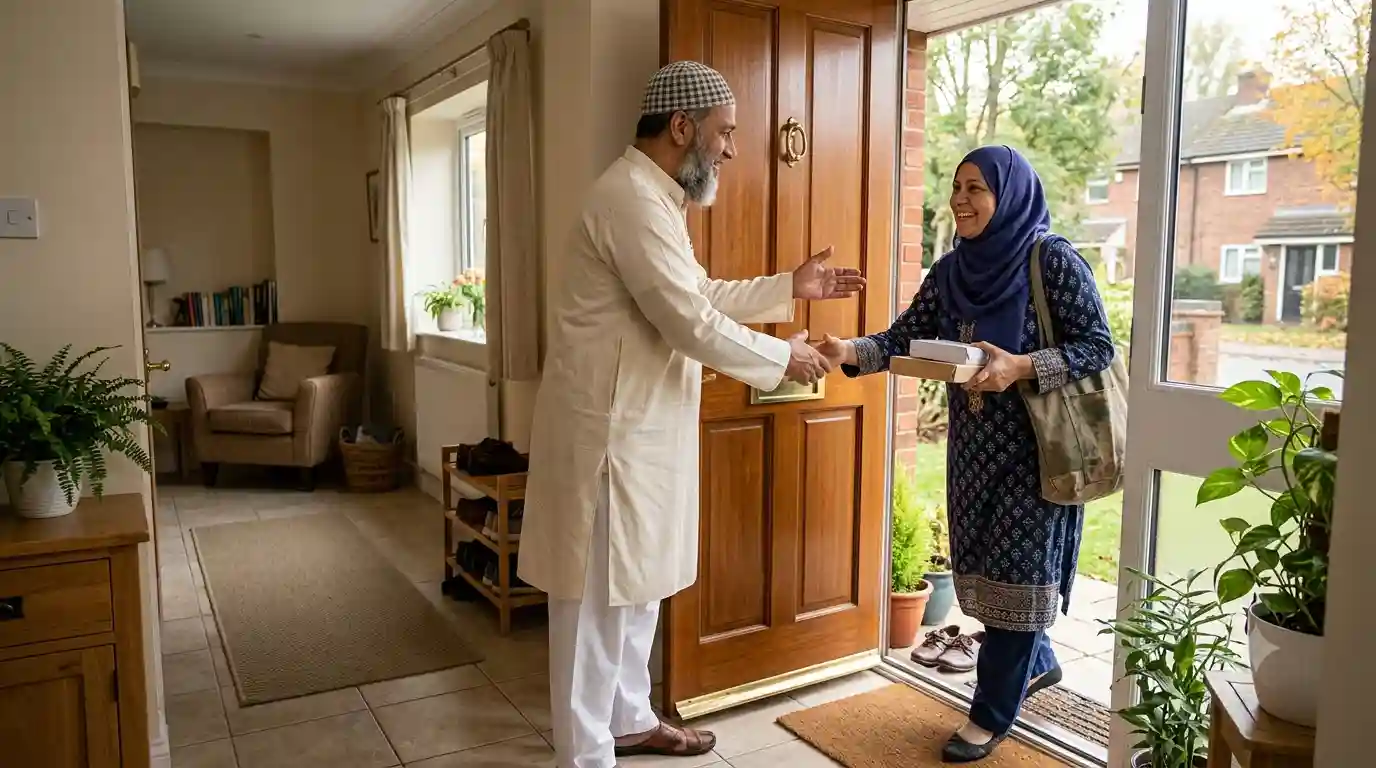
Visiting someone is a simple way to strengthen relationships, show kindness, and maintain family and community ties. In Islam, good manners are important not only when welcoming guests but also when entering someone else’s home, speaking with the family, accepting hospitality, and respecting their privacy.
Islamic etiquette for visiting someone teaches Muslims to approach others with respect, consideration, humility, and kindness. These principles apply when visiting relatives, friends, neighbors, colleagues, and fellow Muslims.
The Qur’an provides clear guidance about asking permission before entering homes and returning politely when permission is not granted. Islamic teachings also encourage good character, maintaining family relationships, and treating others with consideration.
Whether you are visiting a relative after a long time, stopping by a neighbor’s home, or accepting an invitation from a friend, understanding these manners can help make your visit pleasant and respectful.
This guide explains the main Islamic teachings about visiting others, practical manners for guests, and simple steps you can follow before, during, and after a visit.
What Does Islam Teach About Visiting Others?
Islam places great importance on good character, respect for other people, and maintaining relationships. Visiting others can be an opportunity to show affection, strengthen family ties, help someone who needs support, and build a caring community.
However, a visit should not come at the expense of another person’s privacy, comfort, or rights.
Islamic guidance about visiting others includes several important principles:
- Respect: Treat the host and everyone in the home politely.
- Permission: Do not enter a home without the appropriate permission.
- Privacy: Respect personal spaces and information.
- Kindness: Speak gently and avoid behavior that causes unnecessary discomfort.
- Gratitude: Appreciate hospitality without making unreasonable demands.
- Consideration: Be mindful of the host’s time, circumstances, and responsibilities.
The Prophet Muhammad ﷺ emphasized good character in many authentic narrations. In Sahih al-Bukhari 6018, he teaches that whoever believes in Allah and the Last Day should speak good or remain silent, and he also mentions honoring one’s neighbor and guest. Source: Sahih al-Bukhari 6018.
These teachings provide a foundation for being a considerate guest and treating others well.
It is also useful to distinguish between direct Islamic instructions and practical etiquette. For example, asking permission before entering is explicitly addressed in the Qur’an, while sending a message before an ordinary social visit is a practical way to respect someone’s schedule.
Both can help Muslims develop considerate habits, but they should not be presented as having identical religious status.
Ask Permission Before Entering
Asking permission is one of the clearest Islamic guidelines for visiting someone’s home.
Allah says in Surah An-Nur:
“O you who have believed, do not enter houses other than your own houses until you ascertain welcome and greet their inhabitants.”
Qur’an 24:27 — translation wording varies by translator. Read the verse on Quran.com.
The next verse explains what to do if permission is not granted:
“And if you are told, ‘Go back,’ then go back; it is purer for you.”
Qur’an 24:28 — Read the verse on Quran.com.
These verses establish the importance of respecting the privacy of other people’s homes.
How to ask permission politely
When you arrive at someone’s home:
- Knock or ring the doorbell appropriately.
- Greet the people of the home with Salam.
- Identify yourself if the host does not immediately recognize you.
- Wait for a response instead of entering without permission.
- Enter only when the appropriate permission has been given.
For example, you might say:
“Assalamu Alaikum. It’s Ahmed. Is this a convenient time to visit?”
The name is only an example; the same approach works for anyone.
What if the host does not answer?
Wait a reasonable amount of time and, if appropriate, try contacting the host through an agreed communication method. Do not keep knocking aggressively or attempt to look inside.
If the host says they cannot receive visitors, accept the answer politely. You do not need to demand an explanation or make the person feel guilty.
Respecting permission is an important part of good Islamic manners.
Greet the Host With Salam
The Islamic greeting, Assalamu Alaikum, means “Peace be upon you.”
It is a respectful way to greet your host and the people in the home. Returning the greeting is also an established Islamic duty, as explained in Qur’an 4:86.
The Qur’an also mentions greeting people when entering homes in Surah An-Nur 24:61. Read Qur’an 24:61 on Quran.com.
When visiting someone, you can follow a simple pattern:
- Greet the household with Salam.
- Speak in a friendly and respectful tone.
- Allow the host to welcome you before moving further inside.
- Greet other people present when appropriate.
For example:
“Assalamu Alaikum. I hope you and your family are doing well.”
You do not need an elaborate greeting. A sincere greeting, a pleasant manner, and consideration for the people around you are enough to begin a visit respectfully.
Choose a Suitable Time to Visit
A good guest considers whether the visit is convenient for the host.
Someone may be working, caring for children, preparing a meal, resting, attending to a personal matter, or managing an unexpected situation.
Islamic etiquette encourages consideration, but there is no single visiting schedule that applies to every social situation.
Practical ways to choose a suitable time
- Contact the host beforehand when practical.
- Ask whether the proposed time works for them.
- Avoid assuming that relatives or close friends are always available.
- Consider work schedules, family responsibilities, and local circumstances.
- If the visit is unexpected, be ready to leave if it is inconvenient.
A simple message can prevent misunderstanding:
“Assalamu Alaikum. I was hoping to visit you this weekend. Would Saturday afternoon be convenient?”
This is practical advice rather than a claim that every ordinary visit must be arranged through a message.
The purpose is to make the visit comfortable for both the guest and the host.
Build better habits by following a simple Islamic daily routine that includes prayer, Quran reading, remembrance of Allah, and good manners throughout the day.
Respect the Privacy of the Home
A person’s home is a private space. Being invited inside does not mean that a guest has unrestricted access to every room, conversation, or personal belonging.
The guidance in Qur’an 24:27–28 emphasizes permission and respect for the household. A considerate visitor applies this principle throughout the visit, not only at the front door.
Follow these practical guidelines:
- Do not look into bedrooms or other private rooms without permission.
- Do not open cupboards, drawers, bags, or personal belongings.
- Do not walk into a restricted area simply because a door is open.
- Avoid staring into the home while waiting for the door to open.
- Ask before taking photographs or recording videos.
- Do not share private family conversations, photographs, or personal information without consent.
For example, if your host leaves the room to attend to something, do not use that moment to explore the house. Remain where you were welcomed or ask whether you may move elsewhere.
Privacy also applies to digital communication. A photograph taken during a friendly gathering should not automatically be posted on social media. The people pictured may prefer to keep their family life private.
Respecting these boundaries shows consideration and helps build trust.
Be a Considerate Guest
A good guest makes the visit comfortable rather than creating unnecessary pressure for the host.
The Prophet Muhammad ﷺ encouraged honoring guests in the authentic narration found in Sahih al-Bukhari 6018. This teaching highlights the value of hospitality, while also reminding guests to behave with good character.
Important manners for guests
Keep the visit reasonably timed. Enjoy the conversation, but notice whether the host is becoming tired or needs to return to other responsibilities.
Speak politely. Avoid shouting, insulting language, and unnecessary arguments.
Avoid gossip. Do not turn the visit into an opportunity to criticize absent relatives or expose someone’s private matters.
Respect household rules. If the host asks you to remove your shoes, keep children away from a particular area, or avoid using a certain room, cooperate where reasonably possible.
Look after children. Teach children to greet people respectfully, avoid damaging belongings, and follow the host’s instructions.
Avoid unnecessary work for the host. Do not expect elaborate meals, special arrangements, or constant entertainment.
Show appreciation. Thank the host for their time and hospitality.
These practical habits are useful whether you are visiting a neighbor for ten minutes or spending an afternoon with relatives.
Accept Hospitality With Good Manners
Hospitality is an opportunity to show generosity and strengthen relationships. When someone offers you tea, water, or a meal, respond graciously.
If you accept, express appreciation. If you cannot accept because of a dietary restriction, health-related concern, personal preference, or another reasonable circumstance, explain politely without criticizing the host.
For example:
“JazakAllahu khayran for offering. I appreciate it, but I won’t have anything to eat right now.”
Or:
“Thank you for preparing this. I really appreciate your kindness.”
A good guest does not demand expensive food, compare one household’s hospitality with another’s, or embarrass the host over what they can afford.
At the same time, hosts should be considerate of their guests. They should not pressure someone to eat more than they want or make a guest feel unwelcome because they cannot accept a particular dish.
The aim is mutual respect, generosity, and comfort rather than a competition over who provides the most elaborate hospitality.
Follow Islamic Guidelines About Food
Eating together can be a pleasant part of visiting relatives and friends. Islam encourages good manners, cleanliness, and gratitude, and the Qur’an instructs people to eat and drink without excess (Qur’an 7:31).
When eating at someone’s home, keep the following points in mind:
- Begin with the name of Allah by saying Bismillah.
- Eat in a clean and considerate manner.
- Avoid wasting food.
- Take a reasonable portion and request more if needed.
- Thank the host for the meal.
- Avoid criticizing the food in a way that hurts the person who prepared it.
An authentic narration in Sahih al-Bukhari 3563 describes the Prophet ﷺ as never criticizing food: if he liked it, he ate it; if he did not like it, he left it. Read Sahih al-Bukhari 3563.
This provides a useful lesson in courtesy. A guest does not need to pretend to like every dish, but can decline something without insulting the person who offered it.
People may have allergies, dietary restrictions, medical needs, or other reasons for refusing food. Islamic manners should be applied with understanding rather than used to pressure someone into eating.
Keep Conversations Respectful
Conversation can strengthen relationships, but careless words can damage them.
The Prophet ﷺ taught Muslims to speak good words or remain silent, as recorded in Sahih al-Bukhari 6018. This principle is particularly useful when visiting someone’s home, where people should feel comfortable and respected.
Topics and habits to approach carefully
- Backbiting about relatives, friends, or neighbors
- Mocking someone’s appearance, background, or circumstances
- Asking intrusive questions about income, debt, marriage, or children
- Pressuring someone to discuss personal health matters
- Sharing another person’s private difficulties
- Turning a friendly discussion into a heated argument
- Making jokes that embarrass or humiliate someone
Instead, ask about the person’s well-being, family, interests, or other topics they are comfortable discussing.
If a sensitive issue arises, listen without immediately judging. You can disagree respectfully without trying to win every conversation.
A good visit should leave people feeling that they have been treated with kindness, not that they have been examined, criticized, or embarrassed.
Visiting Relatives and Neighbors
Maintaining family relationships is an important Islamic teaching. The Qur’an repeatedly commands kindness toward relatives, and authentic Hadith warn against severing family ties.
In Sahih al-Bukhari 5984, the Prophet ﷺ speaks about the virtue of maintaining ties of kinship. Read Sahih al-Bukhari 5984.
Visiting relatives can provide opportunities to:
- Check on elderly family members.
- Support someone experiencing difficulties.
- Strengthen relationships between generations.
- Encourage children to know their relatives.
- Resolve misunderstandings where reconciliation is appropriate.
- Share happiness during important family occasions.
Kindness toward neighbors is also strongly emphasized in Islam. The Prophet ﷺ taught that the angel Jibril continued advising him about neighbors until he thought they might be given a share of inheritance, as reported in Sahih al-Bukhari 6014. Read Sahih al-Bukhari 6014.
Visiting a neighbor, checking on someone who is unwell, or offering help can strengthen community relationships.
However, maintaining relationships does not mean ignoring everyone’s circumstances. A relative may work long hours, a neighbor may need privacy, and an elderly person may become tired easily.
Choose a considerate approach and do not assume that a particular number of visits per month or year is universally required by Islam.
Islam encourages Muslims to treat their neighbors with kindness, respect, and compassion. Learn more about the Rights of Neighbors in Islam and how Islamic teachings guide us to build peaceful relationships with the people living around us.
When It Is Time to Leave
A good guest understands that hospitality requires time and effort.
Even when a conversation is enjoyable, the host may have other responsibilities. They may need to prepare for work, care for children, rest, or attend to another commitment.
You can recognize these circumstances without waiting for the host to become uncomfortable.
Before leaving:
- Thank the host for welcoming you.
- Express appreciation for their time and hospitality.
- Say goodbye respectfully to the people present.
- Avoid making the departure unnecessarily lengthy.
- Leave without creating a disturbance.
For example:
“JazakAllahu khayran for having me. It was lovely to see you and your family. May Allah bless you.”
This is an example of a courteous farewell, not a required formula.
If you are staying overnight or visiting for an extended period, discuss arrangements in advance and be considerate of the household’s routine.
What If the Host Cannot Receive You?
Sometimes the host cannot welcome visitors. They may be ill, busy, resting, caring for a family member, or dealing with a private matter.
In such circumstances, accept the answer without taking it personally.
Qur’an 24:28 specifically instructs visitors to return when they are told to return, describing that response as purer for them.
A respectful response might be:
“No problem at all. I understand. We can arrange another time, in sha Allah.”
Avoid demanding an explanation, repeatedly insisting that the host open the door, or making comments intended to create guilt.
Even close relatives and longtime friends should respect reasonable boundaries.
If the visit is important or urgent, explain the reason politely and ask whether another arrangement would be possible. An urgent situation may require a different practical response, but it is not a general excuse to disregard another person’s privacy.
Common Mistakes to Avoid When Visiting Someone
Remember these common mistakes:
- Entering without permission
- Looking into private rooms or belongings
- Arriving at an inconvenient time without checking when checking is practical
- Staying long after the host needs to attend to other responsibilities
- Criticizing the food, home, or household arrangements
- Gossiping or asking intrusive personal questions
- Taking photographs or posting them without appropriate consent
- Allowing children to damage belongings or disturb others
- Pressuring the host to provide special food or entertainment
- Ignoring the host’s request to leave
- Becoming angry when permission is not granted
- Sharing private information learned during the visit
Avoiding these behaviors is a practical way to apply the Islamic principles of respect, kindness, privacy, and good character.
❤️ Enjoying Our Free Islamic Resources?
If this article has benefited you, please consider supporting OnlyIslamWay. Your contribution helps us continue providing free Islamic educational resources for Muslims worldwide.
❤️ Donate with PayPalFrequently Asked Questions
1. What is the Islamic etiquette for visiting someone?
Islamic visiting etiquette includes asking permission before entering, greeting the household with Salam, respecting privacy, speaking kindly, appreciating hospitality, and leaving considerately. Qur’an 24:27–28 specifically addresses entering homes and returning when permission is not granted. These teachings help Muslims protect others’ privacy and maintain good relationships.
2. Does Islam require asking permission before entering a home?
Yes. Qur’an 24:27 instructs believers not to enter homes other than their own without first seeking permission and greeting their inhabitants. Qur’an 24:28 instructs visitors to return when told to do so. The exact application can depend on circumstances, such as the household’s prior permission or an emergency.
3. What should a Muslim say when visiting someone?
A Muslim can greet the household by saying Assalamu Alaikum, meaning “Peace be upon you.” It is also courteous to introduce yourself if necessary and ask whether it is a convenient time to visit. The greeting should be accompanied by a respectful manner and consideration for the people in the home.
4. Is it acceptable to visit someone without informing them first?
Unexpected visits are not automatically inappropriate in every social situation, but visitors must respect the Qur’anic guidance about permission before entering. Contacting the host beforehand is often a considerate practical choice. If the visit is unexpected and the host cannot receive you, accept the answer without pressure or resentment.
5. What should you do if someone does not allow you to enter?
Accept the decision politely and leave without demanding an explanation. Qur’an 24:28 explicitly instructs visitors to return when they are told to return. You can arrange another visit later if the host is willing. Respecting privacy is more important than insisting on being received.
6. How long should a guest stay according to Islamic manners?
There is no single duration that applies to every ordinary social visit. A considerate guest takes account of the host’s circumstances, avoids creating unnecessary work, and leaves when appropriate. Longer visits should be arranged with consideration for the household. The guiding principles are respect, kindness, and avoiding inconvenience.
7. What are the manners of a good guest in Islam?
A good guest asks permission before entering, greets the household, respects private spaces, speaks kindly, avoids gossip, and appreciates hospitality. They also follow reasonable household rules and avoid overstaying. These practices reflect the broader Islamic emphasis on good character and honoring others.
8. Is visiting relatives encouraged in Islam?
Yes. Islam strongly encourages maintaining family ties and treating relatives well. Sahih al-Bukhari 5984 discusses the virtue of maintaining ties of kinship. Visiting relatives can help strengthen relationships and provide support, but the frequency and arrangements should take account of people’s circumstances and responsibilities.
Conclusion
Islamic etiquette for visiting someone is built around respect, privacy, kindness, and consideration. Asking permission before entering, greeting the household with Salam, speaking respectfully, appreciating hospitality, and leaving at a suitable time are practical ways to put these values into action.
The Qur’an provides clear guidance about permission and respecting a household’s decision when a visit is not possible. Authentic Hadith also emphasize good character, honoring guests, maintaining family ties, and treating neighbors well.
These manners apply whether you are visiting a close relative, a friend, a neighbor, or someone you have recently met.
Before your next visit, remember three simple principles: ask permission, respect privacy, and treat the host with kindness. Small acts of consideration can help preserve relationships and make visits pleasant for everyone.
May Allah help us develop excellent character, respect the rights of others, and maintain our relationships with sincerity and kindness. Ameen.