
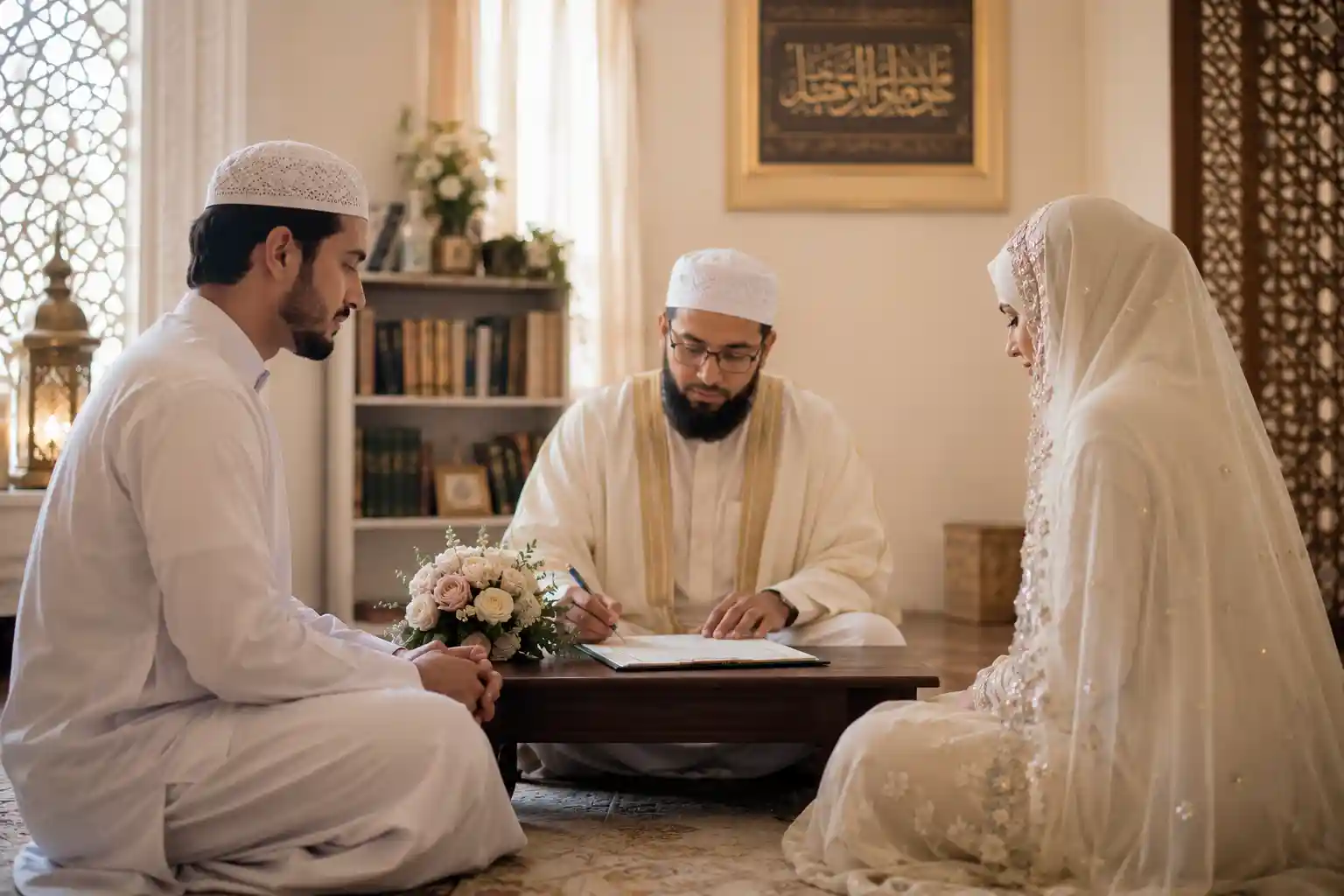
Marriage is one of the greatest blessings from Allah and an important part of a Muslim’s life. This Islamic Marriage Guide explains everything beginners need to know about Nikah in Islam, including its purpose, conditions, rights, responsibilities, and the Sunnah way of building a happy family.
Islam does not view marriage as only a social event or legal agreement. It is an act of worship (‘ibadah) that brings two people together to worship Allah, protect their faith, and build a righteous family. Through marriage, Muslims seek love, mercy, peace, and companionship while following the guidance of the Quran and the authentic Sunnah.
In today’s world, many people learn about relationships through culture or social media rather than authentic Islamic teachings. This can lead to misunderstandings about marriage, family life, and the responsibilities of spouses. Learning the Islamic way helps Muslims begin married life on a strong foundation of faith, respect, and kindness.
Whether you are planning to marry, recently accepted Islam, or simply want to increase your knowledge, this guide will help you understand the fundamentals of Islamic marriage. For personal legal rulings or unique situations, always consult qualified Islamic scholars.
✔ Easy to read | ✔ Printable | ✔ Step-by-step guide
What Is Marriage (Nikah) in Islam?
Nikah is the Islamic marriage contract between a man and a woman. It is a lawful agreement that allows them to live together as husband and wife according to Allah’s guidance.
Unlike temporary relationships, Islam views marriage as a serious commitment built upon responsibility, mutual respect, compassion, and obedience to Allah.
Allah says in the Quran:
“And among His signs is that He created for you spouses from among yourselves so that you may find tranquility in them; and He placed between you affection and mercy.”
(Quran 30:21)
This beautiful verse explains that marriage is designed to bring peace, love, and mercy into the lives of both spouses.
Marriage Is a Sacred Contract
Nikah is not merely a ceremony. It is a binding contract that creates rights and responsibilities for both husband and wife. Each spouse agrees to fulfill their obligations while treating one another with justice and kindness.
Marriage in Islam is intended to:
- Protect faith
- Preserve modesty
- Build a righteous family
- Raise believing children
- Create emotional and spiritual support
- Strengthen society through stable families
Because of its importance, Islam encourages Muslims to prepare for marriage with sincerity, good character, and knowledge.
Importance of Marriage in Islam
Marriage holds a very high status in Islam. It is one of the Sunnahs of the Prophet Muhammad ﷺ and one of the best ways to protect one’s religion.
The Prophet ﷺ said:
“Marriage is part of my Sunnah, and whoever turns away from my Sunnah is not from me.”
(Sahih Ibn Hibban – authentic meaning supported by authentic narrations)
Islam encourages those who are able to marry rather than delaying it without a valid reason.
Allah also says:
“Marry the unmarried among you…”
(Quran 24:32)
1. Marriage Protects Faith
Marriage helps Muslims avoid sinful relationships and maintain modesty.
The Prophet Muhammad ﷺ said:
“O young people! Whoever among you is able to marry should marry, for it helps him lower his gaze and guard his chastity.”
(Sahih al-Bukhari; Sahih Muslim)
This hadith highlights one of the greatest wisdoms behind marriage.
2. Building a Muslim Family
Strong Muslim families create strong Muslim communities.
Parents have the responsibility to raise children who worship Allah, respect others, and live according to Islamic values.
3. Emotional Comfort
Marriage provides companionship during both happy and difficult times.
The Quran describes spouses as garments for one another:
“They are clothing for you and you are clothing for them.”
(Quran 2:187)
Just as clothing protects and comforts us, spouses should support, protect, and care for one another.
4. Raising Righteous Children
Children are a trust from Allah.
Islam teaches parents to provide:
- Islamic education
- Good manners
- Love
- Discipline with kindness
- Positive role models
A peaceful home helps children grow into faithful Muslims.
💧 Learn Wudu Step by Step
Want to learn the correct way to perform Wudu before Salah? Follow our complete beginner-friendly guide with easy steps, pictures, duas, and important Sunnah tips.
Read Complete Wudu GuideConditions of a Valid Nikah
Islam has clear conditions that must be fulfilled for a marriage to be valid. These conditions protect the rights of both spouses and ensure that the marriage is conducted openly and honestly.
1. Mutual Consent
Both the bride and groom must willingly agree to the marriage.
Forced marriages are not permitted in Islam.
The Prophet ﷺ invalidated marriages in which women were forced into marriage without their consent, demonstrating the importance of free choice.
2. Wali (Guardian)
For a Muslim woman, a wali (guardian) normally participates in the marriage contract according to the majority of Islamic scholars.
The wali helps protect the woman’s interests and ensures that the marriage is conducted properly.
If there are exceptional circumstances, qualified scholars or Islamic authorities should be consulted.
3. Two Trustworthy Witnesses
A valid Nikah generally requires two trustworthy Muslim witnesses.
Witnesses help ensure that the marriage is public and transparent.
4. Mahr (Dowry)
The husband must give the wife a Mahr.
Mahr is:
- A gift
- The wife’s exclusive property
- Her right under Islamic law
- Agreed upon before or during the marriage contract
The value of Mahr may be simple or expensive depending on mutual agreement.
Islam encourages ease rather than burden.
5. Marriage Contract
The Nikah contract officially establishes the marriage.
It includes:
- Bride and groom
- Guardian (where applicable)
- Witnesses
- Mahr
- Offer and acceptance (Ijab and Qabul)
Once completed according to Islamic requirements, the couple becomes husband and wife.
Ready to Learn How to Pray Salah?
Now that you’re learning how to read Arabic, the next important step is learning how to perform Salah correctly. Follow our complete beginner-friendly guide that explains every prayer step with easy instructions and illustrations.
📖 How to Pray Salah Step by Step (Complete Beginner’s Guide)How to Perform Nikah Step by Step
Many new Muslims wonder how an Islamic marriage ceremony is performed. While local customs may differ, the essential Islamic steps remain the same.
Step 1: Marriage Proposal
Either family may begin the proposal process.
The Prophet ﷺ encouraged choosing a spouse based primarily on faith and good character.
Step 2: Family Discussion
Families discuss important matters respectfully, including:
- Compatibility
- Religious commitment
- Expectations
- Mahr
- Wedding arrangements
Islam values transparency before marriage.
Step 3: Acceptance
Both the bride and groom clearly express their agreement to marry.
Consent should never be obtained through pressure or coercion.
Step 4: Nikah Khutbah
The Imam or officiant commonly delivers a short sermon (Khutbah al-Hajah), reminding everyone to fear Allah, uphold justice, and fulfill marital responsibilities according to the Quran and Sunnah.
Step 5: Mahr Is Agreed
The Mahr is confirmed and recorded as part of the marriage agreement.
It may consist of money, gold, property, or another lawful gift accepted by the bride.
Step 6: Offer and Acceptance (Ijab and Qabul)
The marriage contract is completed through a clear offer and acceptance in the presence of the required witnesses.
This is the essential moment of the Nikah.
Step 7: Supplication (Dua)
Family and friends make dua asking Allah to bless the marriage with faith, mercy, happiness, and righteous offspring.
One authentic supplication is:
“May Allah bless you, shower His blessings upon you, and unite you both in goodness.”
This dua was taught by the Prophet Muhammad ﷺ for newly married couples.
Step 8: Walimah
After the Nikah, the Sunnah is to hold a Walimah (marriage feast).
The Walimah publicly announces the marriage and allows family and friends to celebrate together in a halal manner.
Islam encourages simplicity and gratitude rather than extravagance.
Rights of the Husband in Islam
Islam teaches that marriage is built on justice, compassion, and cooperation—not superiority or oppression. Both spouses have rights and responsibilities, and each is accountable before Allah for how they treat the other.
The Quran says:
“And they (women) have rights similar to those (of men) over them according to what is reasonable…”
(Quran 2:228)
A husband has certain rights within marriage, but these rights come with the responsibility to fulfill his own obligations first. He should never misuse Islamic teachings to justify harshness or injustice.
1. Respect and Kindness
A husband deserves respect from his wife, just as he must respect her. Mutual respect creates trust and strengthens the marriage.
Respect includes:
- Speaking politely
- Appreciating one another
- Avoiding insults or humiliation
- Supporting each other during challenges
2. Faithfulness
Both husband and wife must remain faithful to one another.
Islam strictly forbids adultery and encourages spouses to protect the honor and dignity of their marriage.
3. Cooperation in Family Life
Marriage is a partnership. A husband has the right to expect cooperation in building a peaceful Islamic home.
This includes:
- Discussing important family matters
- Raising children together
- Solving problems with wisdom
- Supporting each other’s goals
4. Protection of Privacy
Private matters between spouses should remain confidential.
The Prophet Muhammad ﷺ strongly discouraged exposing the private affairs of one’s spouse.
Rights of the Wife in Islam
Islam gave women many rights over 1,400 years ago, including financial security, inheritance, dignity, and protection. A Muslim husband is responsible for treating his wife with kindness and fairness.
The Prophet ﷺ said:
“The best of you are those who are best to their wives, and I am the best of you to my wives.”
(Jami’ at-Tirmidhi – Hasan Sahih)
1. Kind Treatment
Allah commands husbands to live with their wives in kindness.
“Live with them in kindness.”
(Quran 4:19)
Kind treatment includes:
- Gentle speech
- Patience
- Appreciation
- Emotional support
- Avoiding abuse or harsh behavior
2. Financial Support (Nafaqah)
A husband is responsible for providing according to his ability.
This generally includes:
- Food
- Clothing
- Safe housing
- Basic living expenses
Providing for one’s family is an act of worship when done sincerely for Allah.
3. Emotional Care
Marriage is not only about financial responsibilities.
A wife has the right to:
- Love
- Compassion
- Attention
- Encouragement
- Time with her husband
Small acts of kindness often strengthen a marriage more than expensive gifts.
4. Privacy and Dignity
Islam protects the dignity of every Muslim.
A husband should never publicly embarrass or insult his wife or reveal private marital matters.
5. Fairness
If disagreements arise, Islam teaches justice, consultation, patience, and reconciliation before conflict escalates.
Both spouses should seek peaceful solutions whenever possible.
Responsibilities of Both Husband and Wife
A successful Islamic marriage depends on both spouses fulfilling their responsibilities sincerely.
Love and Mercy
Allah describes marriage as a relationship filled with affection and mercy.
Instead of trying to “win” arguments, spouses should try to preserve love and harmony.
Good Communication
Healthy communication includes:
- Listening carefully
- Speaking respectfully
- Avoiding shouting
- Discussing problems calmly
- Seeking understanding
Many marital problems can be reduced through honest and respectful communication.
Patience
No marriage is perfect.
Both spouses should show patience during:
- Financial difficulties
- Illness
- Stress
- Misunderstandings
- Personal growth
Patience is one of the greatest qualities praised in the Quran.
Trust
Trust develops through honesty and consistency.
Avoid:
- Lying
- Secretive behavior
- Unnecessary suspicion
- Breaking promises
Forgiveness
Every person makes mistakes.
The happiest marriages often include spouses who forgive one another sincerely and seek Allah’s forgiveness together.
Cooperation
Household responsibilities should be approached with kindness and teamwork.
Authentic narrations mention that the Prophet Muhammad ﷺ helped his family with household tasks, demonstrating humility and good character.
Islamic Relationship Before Marriage
Many young Muslims ask how they should interact before marriage.
Islam encourages modesty while allowing lawful steps toward marriage.
Lower the Gaze
Allah commands believing men and women to lower their gaze and guard their modesty.
This protects hearts and prevents temptation.
Avoid Haram Relationships
Islam discourages romantic relationships outside of marriage.
This includes relationships that involve ongoing intimate emotional or physical attachment without Nikah.
Instead, Muslims should pursue marriage through halal means.
Family Involvement
Family members and guardians often provide wisdom, support, and protection throughout the marriage process.
Their involvement helps ensure transparency and compatibility.
Halal Proposal Process
The Sunnah encourages:
- Learning about the prospective spouse’s religion and character.
- Asking respectful questions.
- Consulting trusted family members.
- Performing Salat al-Istikharah when making important decisions.
- Proceeding with honesty and sincerity.
Sunnah of Marriage
Following the Sunnah brings blessings into married life.
Choose a Righteous Spouse
The Prophet ﷺ advised Muslims to prioritize religion and good character when selecting a spouse.
Qualities to look for include:
- Strong faith
- Honesty
- Good manners
- Responsibility
- Patience
- Respect for family
Keep the Wedding Simple
Islam encourages simplicity.
Expensive weddings are not a requirement for a blessed marriage.
Avoid:
- Wasteful spending
- Showing off
- Financial hardship caused by wedding expenses
Perform Walimah
Holding a Walimah after Nikah is a Sunnah of the Prophet ﷺ.
The celebration should remain halal and free from sinful practices.
Make Dua Together
Regular dua strengthens both faith and the marital relationship.
Ask Allah for:
- Love
- Mercy
- Patience
- Righteous children
- Protection from trials
Develop Good Character
Good character is one of the greatest foundations of a successful Islamic marriage.
The Prophet ﷺ consistently demonstrated:
- Mercy
- Humility
- Patience
- Forgiveness
- Generosity
Muslim couples should strive to follow his example in their daily lives.
Common Mistakes Muslims Should Avoid
While cultures differ around the world, Islamic teachings remain the same. Avoiding common mistakes can help couples build a marriage that pleases Allah.
1. Delaying Marriage Without a Valid Reason
Unnecessarily delaying marriage despite being ready may expose individuals to temptation. Islam encourages marriage for those who are capable.
2. Extravagant Weddings
Lavish celebrations, unnecessary debt, and showing off are discouraged. A simple wedding conducted according to the Sunnah is more blessed.
3. Forced Marriage
Marriage must be entered into willingly. Consent from both the bride and groom is an essential requirement of a valid Nikah.
4. Ignoring Compatibility
Good character, religious commitment, maturity, and shared values are important factors when choosing a spouse.
5. Following Culture Over Islam
Some cultural practices conflict with authentic Islamic teachings. Muslims should always give priority to the Quran and the authentic Sunnah over customs or traditions.
Marriage Tips for Newly Married Couples
Starting married life can be exciting and challenging. The following practical tips can help couples build a strong Islamic home:
- Begin your marriage with sincere intention to please Allah.
- Pray Salah together whenever possible.
- Make dua for each other every day.
- Be patient while learning each other’s personalities.
- Never stop communicating respectfully.
- Appreciate small acts of kindness.
- Avoid comparing your marriage with others, especially on social media.
- Resolve disagreements privately and calmly.
- Continue learning Islam together through authentic books and classes.
- Remember that every successful marriage requires effort, forgiveness, and trust.
A happy Islamic marriage is not built overnight. It grows through faith, sincerity, compassion, and consistent good character.
Frequently Asked Questions (FAQ)
1. What is Nikah in Islam?
Nikah is the Islamic marriage contract between a man and a woman. It is a lawful agreement based on mutual consent, witnesses, and Mahr, establishing a husband-wife relationship according to the Quran and Sunnah.
2. Is love marriage allowed in Islam?
Yes. Islam does not prohibit a marriage where two people choose each other, provided the relationship remains halal before marriage and the Nikah fulfills all Islamic requirements. The process should involve honesty, modesty, and family participation where appropriate.
3. Can Muslims choose their own spouse?
Yes. Both men and women have the right to choose their spouse. A valid Islamic marriage requires the free consent of both parties, and forced marriages are not permitted in Islam.
4. What is Mahr?
Mahr is a mandatory gift from the husband to the wife. It belongs exclusively to the wife and may consist of money, gold, property, or any lawful item agreed upon by both parties.
5. Is engagement mandatory before Nikah?
No. Engagement is a cultural practice in many communities and is not a religious requirement. A couple may proceed directly to Nikah if all Islamic conditions are fulfilled.
6. Can a Muslim woman reject a marriage proposal?
Yes. A Muslim woman has the right to accept or reject a marriage proposal. Her consent is essential for a valid Nikah.
7. Is a court marriage valid in Islam?
A civil or court marriage may satisfy the laws of a country, but from an Islamic perspective, the requirements of a valid Nikah—such as mutual consent, Mahr, witnesses, and other applicable conditions recognized by qualified scholars—must also be fulfilled. Couples should consult knowledgeable local scholars regarding their specific circumstances.
8. What is Walimah?
Walimah is the marriage feast held after the Nikah. It is a Sunnah of the Prophet Muhammad ﷺ and publicly announces the marriage while expressing gratitude to Allah.
9. What makes a Nikah invalid?
A Nikah may be invalid if essential Islamic conditions are not met, such as genuine mutual consent or other required elements recognized by Islamic law. Questions involving specific cases should always be referred to qualified Islamic scholars.
10. How can couples build a happy Islamic marriage?
A successful Islamic marriage is built upon:
- Strong faith
- Daily prayer
- Honest communication
- Mutual respect
- Patience
- Forgiveness
- Mercy
- Following the Quran and authentic Sunnah
Conclusion
Marriage is one of Allah’s greatest blessings and an important part of a Muslim’s journey. As this Islamic Marriage Guide has explained, Nikah is far more than a ceremony—it is a sacred covenant built upon faith, love, mercy, responsibility, and mutual respect.
The Quran and the authentic Sunnah teach that a successful marriage begins with sincere intentions, lawful conduct, and a commitment to fulfilling each spouse’s rights and responsibilities. By choosing a righteous spouse, following the Sunnah, communicating with kindness, and placing Allah at the center of family life, couples can build a peaceful home that benefits both this life and the Hereafter.
Every marriage will experience challenges, but patience, forgiveness, consultation, and reliance upon Allah help couples overcome difficulties together. Remember that no guide can replace personalized advice from knowledgeable scholars, especially regarding complex legal or family matters.
May Allah bless every Muslim marriage with tranquility, mercy, righteousness, and lasting happiness. Ameen.
❤️ Enjoying Our Free Islamic Resources?
If this article has benefited you, please consider supporting OnlyIslamWay. Your contribution helps us continue providing free Islamic educational resources for Muslims worldwide.
❤️ Donate with PayPal